
















I love this series

such a good series and this is the first.

Joyce's mystery and fiction book reviews with some non-fiction too!
Great reads for adults and children!
I love this series
such a good series and this is the first.
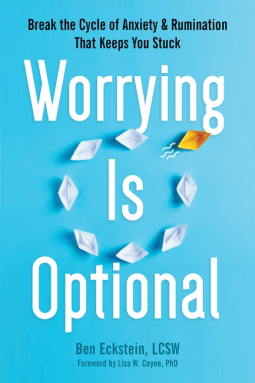
The author of this book wisely notes that we all worry at times. However, worrying as a chronic way of relating to the world and living a life can certainly takes its toll. Mr. Eckstein wants to offer readers a tool kit to cope with this often harrowing emotion.
Using knowledge from different therapeutic schools such as ACT (acceptance and commitment therapy) and CBT (cognitive behavioral therapy), readers will develop strategies. As a result, this book will be most welcome for its audience.
The author writes in a clear and direct style. Read each of the four sections including Understanding Worry, Changing Your Relationship to Worry, Challenging Worry and Living Unbound From Worry and then, hopefully, feel more on top of things as understanding and new skills develop. As the author notes, worry and anxiety will not completely disappear butthe reader will likely be able to better co-exist with these feelings.
Many thanks to NetGalley and New Harbinger Publications. All opinions are my own.
Four stars ****

Imogen has been very (!) unlucky in love; she has experienced 17 breakups. Pretty discouraging readers will agree. They will read this one hoping for a happy ending. It will require the unpredictable.
When high school friend Eliot returns to Imogen’s community, they will work together to change history. Will they succeed?
I predict that readers will love this story. It is charming, funny and a page turner that has some sadness and also some humor and heart..
Many thanks to NetGalley and St. Martin’s Press for this title. All opinions are my own.
This book was published in October 2023.



I am excited about my stop on the blog tour for this title. Readers will want to know how things work our for Meg.
Many thanks to the team at HTP for this opportunity.
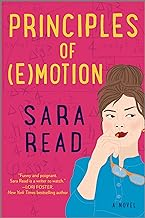
PRINCIPLES OF (E)MOTION
Author: Sara Read
ISBN: 9781525836657
Publication Date: January 9th, 2024
Publisher: Graydon House
18.99 US | 23.99 CAN
A brilliant mind needs a strong heart.
Mathematical genius Dr. Meg Brightwood has just completed her life’s work—a proof of a problem so impenetrable it’s nicknamed the Impossible Theorem.
Reclusive and burdened by anxiety, no one took Meg seriously before. Now everyone wants to get their hands on what she alone possesses—especially her own mathematician father. Having grown up a prodigy in a field plagued by sexism and plagiarism, Meg opts for a public presentation so there is no doubt of her authorship. But a panic attack derails her plans. Defeated, Meg returns to the decaying house where she lives alone and locks away the one and only manuscript of her proof.
Then chance sends her the unlikeliest of allies. Isaac Wells—carpenter, high-school dropout, in trouble with the law. And the one love of Meg’s life. Fifteen years ago, they never did more than hold hands. Now adults, they reach toward each other through the minefield of the past and find a tenuous space where they can love and be loved for who they are.
But when Meg goes to retrieve the Impossible Theorem, she finds it missing. Will she fight for the achievement of the century and the love of a lifetime?
Chapter 1
The night before Lila’s funeral, I rose from my nest on the couch in my study on the third floor of the tower. I had not been sleeping well. Across the room, a damp wind blew through the open window. With both hands, I wrestled it down. The windowpanes and sashes were curved to match the walls of the tower, and they tended to stick. This one wouldn’t shut the last inch, so I gave it up, turned off the lamps and returned to my couch, pulling a throw blanket over my legs. Outside, bluish beams of streetlight illuminated the top limbs of the trees as they swayed in the wind.
Since Lila’s death, I had felt so unmoored that it was almost a physical sense of drift. After spending nearly every hour of every day spooning applesauce off her chin, drawing her ancient arms through threadbare sleeves, bathing and changing her, waking up when she cried out in the night, I felt her absence like a missing a chamber of my own heart. So I went where I always went when I needed an anchor. Back to Frieholdt’s.
My family thought I was in denial, spending the days and nights after her death closed in my study, but it wasn’t denial. It was comfort. As Lila’s needs had increased, I’d had less and less time for Frieholdt’s Conjecture, and now after all that time away, I had new perspective, like seeing it for the first time. I could feel the answer just at the extremity of my understanding.
I was also exhausted. I tugged the blanket toward my chin. Past the rain-rippled windows, the air, water, and trees all moved in apparent entropy—so much turbulence against the unmoving light—and as a mathematician’s mind tends to do, mine searched for patterns. They were always present, and always changing.
I must have slept, because I woke to dark and stillness. The fitful rain had stopped. A single cicada chirped in the top of a tree. As I ascended into a sleep-loosened consciousness, a light glinted—a bright, inner North Star—and in less than an instant I was on my feet, as awake as I had ever been in my life.
Comprehension cannot be predicted. It may come when bidden, one may struggle after it for a lifetime, or it may wait two hundred years to send its bright ray through the darkness. That night, comprehension picked me. It picked four in the morning, after a week of relentless, grief-driven focus. But it found me ready. I knew from a lifetime of training that when the ray of light appeared, I had to keep my eyes on it and not look away, no matter the consequences.
Though the rest of the third floor was a glorified attic with sloping roof and dormer windows, the tower room maintained the grandeur of the rest of the house. I paced the floor, eyes closed, head tilted up.
I forgot the emptiness of the bedroom below my feet where Lila had breathed her last breath. I followed the bright rail of my thoughts as they plunged through the darkness, skimming along, light and swift to the very center of Frieholdt’s Conjecture where I could finally see the last remaining knot. It lay within the Gault function, itself contained within the Wang-Hickman method, a central tool used to predict the motion of noncompressible fluids. The threads grew clear, loosening, almost floating.
From a bent bit of gutter, a single rivulet of water tap-tapped onto the balcony. The pattern began to form.
Turbulence: resistance. Constraint pulling inward. And in parallel, release: spooling out. The opposite of friction. Twin forces, intertwined, dancing.
Math is logic purified to its essence. And logic seeks order and sequence. Deep within that last tangle, I separated the radiant strands. I restrung them and laid them straight, end to end, and at last—at last—they formed a jetway to the center of the universe.
Feet barely touching the floor, I went to my board—five feet tall and twelve feet wide, built to fit the curved wall, with a hand-carved ledge at the bottom—and lifted a cool piece of chalk between my fingers.
Daylight shone through the windows when I woke, still clutching the nub of chalk.
There on my board were a series of functions and shapes in green, white, and yellow. A dimensional representation. A kind of mathematical shorthand.
At that moment, it was not something I could have presented even to another mind such as my own. Still more a small pot holder than a perfectly woven tapestry, but it was all there. So much simpler than I had imaged. As if it had been there all along—which, like all math, it had.
Done.
Twenty-three years of study. Done.
My hands trembled. I blinked, sure that it would disappear or dissolve into nonsense as it had done so many times before. I turned my back, crossed the room, and looked at it from a distance.
Still there.
I opened the window and looked out. Back in the early spring, a work crew had started a renovation on the big house across the street. Men. Trucks. Lumber. The damp smell of oak and grass wafted in. It made me think of Isaac.
I wished I could tell him I did it. I really did it. He always believed I could, if for no other reason than I believed it myself.
There’s a feeling when you meet someone, that somehow you’ve known them all your life. And not even all your life. Like you’ve known them all of some other life where you are completely yourself. Not the one you’re living, where you are who people expect you to be, but some better life. The one you should have been living all along. That’s how it was with Isaac.
No one in my family had known him except Lila, and now the memory was mine alone. And perhaps even Lila didn’t know what we became to one another.
I turned and looked at my board again. It still seemed impossible, but there it was, and the afterglow of epiphany was heaven. Breathless astonishment. A floaty, weightless feeling in my chest. I had done it. At last. And after so many years, it came in such a sudden burst of light.
This would vindicate me. It would prove that Dr. Margaret Brightwood was not a batshit-crazy recluse after all. This would vindicate the little girl who people read about in the news, who had so much power and so much promise.
A soft creak from the third-floor stairs startled me, and I jumped to my feet. No one ever came up here.
“Who is it?” I pressed a hand over my racing heart.
“Meg? Are you all right?”
The door opened, and my panic melted, replaced by that fullness of heart which so often ends in tears. Sweet Lizzie. More sister than cousin. The Sun to my Moon. Her golden hair was tied up, but a fallen strand stuck to her black dress.
I plucked the loose hair off. “What are you doing here?”
“Are you okay?” She looked at me, then scanned the room for—what? “They sent me to look for you.”
“Oh my god.” The funeral. I spun around. “Oh my god. What time is it?”
My clothes. They weren’t even pressed. I had barely slept. I ran past Lizzie and headed for my bedroom. They would all be waiting. My father. My sister. The pastor.
“Meg, you look pale.” Lizzie followed me. “First tell me if you’re okay.”
“Yes, I was—” I stabbed my arms into a black shirt. Legs into slacks. “I was working.”
They would be waiting. Expecting me to drop everything. To run and fulfill my part in this ritual obligation. I sat on the floor to pull on my boots.
But why?
Funerals are for the living. For people who want or need to grieve together. Here’s the truth. As tiny as Lila was, and as hard as she tried not to be a burden, the last years of her life had been a constant struggle, and grief had been my daily companion. I was spent.
My father had visited occasionally. The minister dropped by for a few minutes each week. And my older sister—had she even seen the inside of the house in five years? In the last months, caring for Lila had consumed everything. I slept next to her so she wouldn’t be alone.
My obligations were done. I didn’t need a funeral. I didn’t need to weep and hug a bunch of strangers dressed in black. I only wanted some time to walk the house before the sense of her presence was gone forever.
Lizzie examined me with her gentle eyes. “So…are you done? Working?”
Strong emotions competed for dominance, and extreme exultation was the first to break through.
“Yes, I’m done. I’m finally done.” But laughter gave way quickly to defensiveness. “I have been care-giving twenty-four seven. I swear to god, I haven’t had an uninterrupted hour in I don’t remember how long. And now I finally, finally have the space to think, and you know what? I did it. I did it. And I just want a few fucking minutes to enjoy it.”
By the end I was almost yelling. Then, of course, I wanted to cry. Lizzie didn’t deserve to be yelled at.
She dropped to the floor and put her arms around me. Lizzie was small, slim, and fit. Five years my junior and unfazed by my moods.
“You did what?” she said.
“Frieholdt’s. I solved it.”
“Meg, that’s amazing.”
“I miss her,” I said. “I miss her so much, but it’s been so long since I’ve been able to focus.”
“It’s all right, sweetheart.” Lizzie held tighter.
“I’m not going. I can’t.” I leaned into her embrace. “Maybe Dad’s mad that I’m not there, but he’ll see. They’ll all see that my whole fucking life was worth something.”
Lizzie kissed my cheek. “You were already worth something.”
Then she got out her phone and sent a text, leaning her shoulder firmly against mine like a mare to a skittish foal. “They can finish without us.”
“Lila wouldn’t mind. She never wanted a church funeral or a grave.”
“Plus it’s hot, and the pastor is so boring.” Lizzie put her arms around me again. “Remember when he came over and Grandma would be like, ‘Oh here comes Mr. Finkley, bless his heart.’”
I laughed, so grateful they sent Lizzie. With Lila gone, she was the one person on god’s green earth I could be myself with.
We spent the rest of the morning with photo albums, cross-legged on Lila’s big bed.
“Oh, remember this?” Lizzie held up a picture of the two of us. We were maybe eight and thirteen, standing arm in arm on a rock, a broad shining river behind us. Lizzie had been a sturdy reed of a girl, whereas I had grown curves early and stood as if I were trying to hide them. But we were both smiling and squinting in the sun.
“Harpers Ferry,” Lizzie said. “Lila walked that entire trail with us.”
“Dad didn’t want to let me go.” I took the picture and looked at it close. “But Lila made him.”
Lizzie wept, and I held her in my arms feeling only a hollowness in my throat.
I had wept when Lila started struggling after words for everyday things. When she asked me to stop the crying of a baby only she could hear. When she forgot my name.
I had nothing left.
At that moment I grieved not for the old woman, but for the young, strong Lila who hiked with me and Lizzie to the Shenandoah that day. The last and only person who could get my father off my back.
Excerpted from Principles of (E)motion by Sara Read. Copyright © 2024 by Sara Read. Published by arrangement with Harlequin Books S.A.

SARA READ is cofounder of #momswritersclub. Originally from Washington, DC, she tried the nine-to-five life for about a nanosecond before moving to rural Virginia to become a flute-maker’s apprentice and traditional fiddle player. A cancer survivor herself, Sara now has the distinct privilege of caring for cancer patients as a nurse. She lives in Charlottesville, Virginia, with her husband, two teens, a terrier and three snarky cats. sararead.net
Buy Links:
Harlequin
Social Links:
Author website: https://www.sararead.net/
Instagram: https://www.instagram.com/sarareadauthor/
Twitter: https://twitter.com/sarareadauthor
Facebook: https://www.facebook.com/sarareadauthor/








I liked this one.
The 15 best comfort reads to get you through January

This book will be quite useful to novices who want to have happy houseplants. Those with some experience may also find that they learn something in these pages.
Following a useful introduction this book is broken down into sections on planting, watering & fertilizer, lighting, problem solving, and plant profiles.
I liked the author’s encouraging and low key style. She is a good guide. Her text is accompanied by both photos and helpful graphics.
I especially liked the information on plants that are easy to grow. In that way, a gardener can be set up for success.
Highly recommended to those who want to be surrounded by healthy plants.
Many thanks to NetGalley and Quarto Publishing Group for this title.
Five stars *****






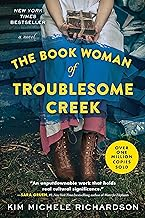



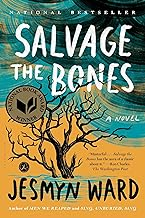


and others in this series. Beautifully illustrated
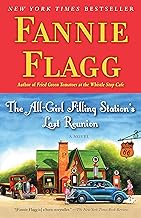
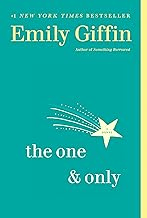

I love Lester’s books









#TheMysteryGuest #NetGalley
Nita Prose’s first novel, The Maid, introduced the interesting hotel maid Molly. She will make readers appreciate the folks who do this work for their comfort. Molly was around murder in that book and history repeats itself here.
The murder takes place in the hotel’s newly refurbished and elegant tea room. The victim is a wildly popular mystery writer with a fan club. He was at the hotel to share an important announcement. Of course, he died before the speech and all of his cue cards are missing.
It turns out that Molly had a connection to this victim. She brings her unique intelligence and set of skills to figuring out what happened. Along the way, readers are treated to many of her aphorisms and get to enjoy her relationship with her grandmother among others.
I was lucky enough to hear the author speak at a mystery conference last year. She acknowledged the difficulties of writing a second book when the first was well received. In my opinion, Ms. Prose did a find job here.
Those who like a traditional mystery with an untraditional protagonist will enjoy The Mystery Guest. This book can be read on its own but readers who like Molly will probably want to read that first book as well.
Many thanks to NetGalley and Random House Publishing Group-Ballantine for this title. All opinions are my own.
This book was published in November 2023

 |  |  |
|---|---|---|
“Heartwarming . . . Like Agatha Christie’s Miss Marple, who’s rendered invisible because she’s an old woman, Molly and her grandmother are not seen because of the kind of work they do. In this affecting and socially-pointed mystery series, however, invisibility becomes the superpower of the pink-collar proletariat.”—NPR
“[Molly] returns in The Mystery Guest, which builds upon The Maid’s many charms. Prose peppers the mystery with sly jokes about the vagaries of crime writing, but Molly’s voice remains central and moving.”—The New York Times
“Molly is a singular character—she’s intelligent, unfailingly honest and the epitome of a professional maid—and readers will enjoy checking into the Regency Grand to follow her and her exploits.”—BookPage
New paperbacks for January 2024 — The Wager, Lionel Shriver and more
 Joyce's mystery and fiction book reviews with some non-fiction too!