
![Her Hidden Genius: A Novel by [Marie Benedict]](https://m.media-amazon.com/images/I/41iMaz86A5L._SY346_.jpg)


Joyce's mystery and fiction book reviews with some non-fiction too!
Great reads for adults and children!

When editor Otto Penzler describes a book as big, he means it! This collection clocks in at over 600 pages. Those who are interested in the evolution of mystery and detective fiction will find much to explore and enjoy here.
The tales are organized into sections entitled Detective, Crime, International and American stories. Read in order or browse widely. Some choices seem unsurprising as, for example, Poe in the American section. More surprising was finding a tale by L Frank Baum (Wizard of Oz fame) included here.
International stories will send readers to France, Russia and Italy for some thrills. Just some of the other authors are Wilkie Collins, Arthur Conan Doyle, Robert Lewis Stevenson, Thomas Hardy and Oscar Wilde.
So, dive in readers. There is loads to while away a winter night.
Many thanks to NetGalley and the publisher. All opinions are my own.
 |  |
|---|

When I was a junior in high school, I took physics. I HATED this class, found it difficult, irrelevant and uninteresting. How good would it have been to be exposed to a book like Physics for Kids long before then! I might have felt completely differently.
Inside this title are all kinds of experiments and activities that are designed to engage kids. Here is information about many scientists, among them Galileo, Sir Isaac Newton, Pierre Curie and Albert Einstein for some household names and others whom I did not know including Katharine Burr Blodgett, Ruby Payne Scott and Lise Meitner to name just three. (Kudos for including women) After each scientist is introduced, there is a well illustrated experiment for kids to try. For example, after reading about Thomas Young and wave theory, do the experiment entitled Light Interference and observe wave patterns in water and then experiment with fringe patterns created by light waves as they move through slits.
I highly recommend this book for school and home libraries. It is well geared to STEM studies.
Many thanks to NetGalley and the publisher for this book. All opinions are my own.


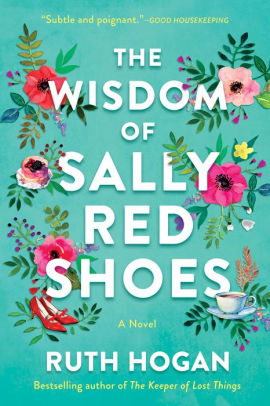 This is author Ruth Hogan’s second novel. I was quite moved by it and plan to read her debut, The Keeper of Lost Things. She has a talent for describing characters who are fully human, quirky and both struggling and trying their best.
The novel is about two women and those they know, love and/or have lost. Masha is a mother whose child disappeared a number of years ago and, although not found, was presumed to be dead. Masha has grieved for him and has struggled to progress in her life. The reader observes as she moves forward bit by bit, fortified by new and old relationships. Part of Masha’s story takes place at the lido, a favorite locale for me after reading Libby Page’s novel. As in that novel, swimming yields some peace.
Then there is Alice. She is a mother who is overprotective and very attached to her son. Her backstory is told with compassion and the reader comes to understand her struggles and decisions.
Sally, herself, is a elderly woman whose past history becomes known late in the novel. She is eccentric and a source of some of Masha’s healing. She reminds Masha of the importance of continuing to dance, both literally and metaphorically. Other characters include Kitty who has overcome her own tragedy.
While characters in this book have experienced loss, the story is not depressing. Ruth Hogan writes empathically and I was sorry when the novel ended. There is a twist that you might see coming but, even if you know, you can enjoy reading about it.
Many thanks to NetGalley and the publisher for this e-galley. Ruth Hogan is an author to watch!

This book offers a compilation of Christie tales in which many share a common theme of love in some manifestation. Inside are well-known sleuths including favorites Tommy and Tuppence Beresford, Jane Marple, and Hercule Poirot, along with the lesser known Parker Pyne.
Inside this volume, the stories are not new, often having been written in the 20s or 30s but they are combined here for the first time. All are good reads.
Sometimes a short story is just the right read. Maybe a reader is too busy for a long novel or maybe it is a day with a short attention span or possibly a reader’s preferred format is the short story. For all of these readers, here is a treat.
Many thanks to NetGalley and the publisher. All opinions are my own.

The first thing that I want to note about this title is that it is geared toward British readers. For that reason, some of the specifics may not be as useful for those from other countries. However, that said, there are many good things to think about here and with a bit of research, readers can most likely find similar resources in their own countries.
There are a number of chapters that have to do with finances, including budgeting, pensions, tax and more. I like that there other sections that look at options for life as a retiree; for example, there are sections on leisure activities including adult education, the arts, dance, museums and more. There are also chapters on starting a business and even one on looking for paid work. In addition, there is a detailed section on health.
This is a book that includes a lot. Readers can tackle it by going straight through or by focusing on areas of interest.
Many thanks to NetGalley and the publisher. All opinions are my own.
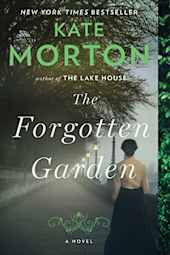
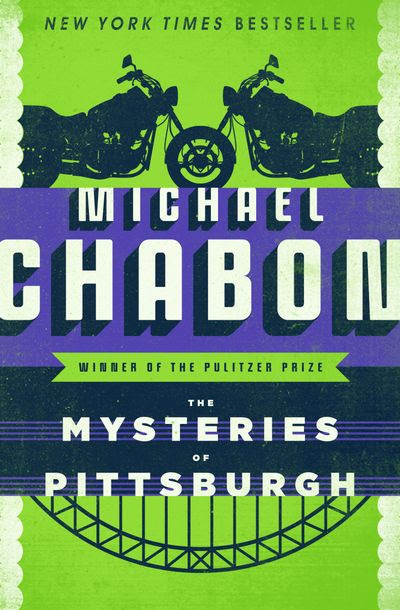
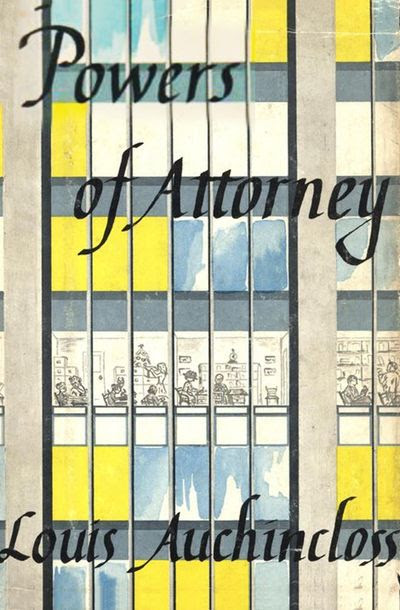
![SMILE AND BE A VILLAIN a cozy murder mystery full of twists by [JEANNE M. DAMS]](https://m.media-amazon.com/images/I/510LJReluXS.jpg)
![Anthony Trollope: The Chronicles of Barsetshire & The Palliser Novels (Unabridged): The Warden + The Barchester Towers + Doctor Thorne + Framley Parsonage ... + The Prime Minister + Eustace Diamonds… by [Anthony Trollope]](https://m.media-amazon.com/images/I/511vziN78oL.jpg)



All the June 2022 Prepub Alerts in one place, plus a downloadable spreadsheet of all titles from every post.
— Read on www.libraryjournal.com/story/Prepub-Alert-June-2022-The-Complete-List

