The title of this novel has several meanings as readers who pick up this one up will discover. See how many you can come up with. It was a clever name for the book.
This novel is about Leonard and Vivian (who married somewhat against the wishes of Vivian’s family) and those around them. Together the two founded the Hollander Estates winery. At first, Vivian felt like she made a real contribution to the vineyard but, over time, Leonard became the one making all of the decisions. Is this about to change? What will be the role of a French Count in this?
Vivian and Leonard had two children, Leah and Asher. A traditional patriarch, Leonard has involved Asher in the business while keeping his daughter at bay. Is this the best plan? Leah is a successful cheese monger and capable business woman. Her husband Steven and daughter, Sadie are other characters in the novel as are some of the men who work for the winery, including Mateo.
As the novel opens, Hollander Estates is facing major changes. These have the potential to impact all of the characters. Readers will watch as decisions are made.
Brenner is interested in the story’s women and their agency. Interestingly, she brings this topic more into focus by highlighting a number of books from the 1980s including Scruples, MIstral, Lucky and others. Do the fictional women characters in this novel have something to teach the women in the story? Will they help Sadie to complete her academic studies?
Readers can probably guess some of how the story will unfold but the book can still be enjoyed. They will also learn a fair bit about wine (and cheese) along the way.
Many thanks to NetGalley and the publisher for this title. All opinions are my own.
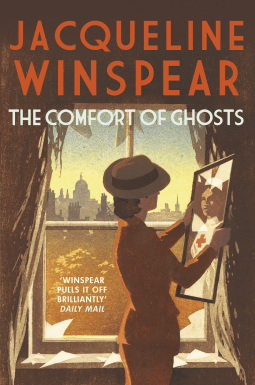
Like many readers, I first met Maisie Dobbs twenty years ago. That, in itself, seems remarkable to me. Winspear has kept the series fresh over many books. Readers have watched Maisie develop and grow into herself. Watching Maisie evolve has always been one of the best parts of the books. The mysteries and depictions of war’s impact on people have also been well done.
I will miss Maisie, her husband, her daughter, Billy, Lady Compton and so many others. I hate to see the series end. However, all credit to Winspear for ending in such a satisfying way.
I am not giving much detail on the book. I want to leave that for the reader as they savor their final visit with Maisie. It has been quite a run!
Many thanks to NetGalley and Allison & Busby for this title. All opinions are my own.
This is a beautiful novel about the hardest of times. Readers follow Lucy as she slowly comes to understand the magnitude and tragedy of the Covid epidemic.
This quote brings things into focus and puts the reader firmly in Lucy’s world:
Here is what I did not know that morning in March. I did not know that I would never see my apartment again. I did not know that one of my friends and a family member would die of this virus. I did not know that my relationship with my daughters would change in way I could never had anticipated. I did not know that my entire life would become something new.
Strout’s writing is so effective. Like Hemingway, she knows the value of some unembellished prose. This matter of fact style makes the awfulness of Covid even more acute.
Strout has written many novels. I have not read them all. However, I did recognize characters in this story from those that I had read. This, to me, adds to the sense of a universe populated by folks that I feel I know.
I recommend this book about Lucy, William and those around her as they spend time in Maine. It is impactful with tragedy, relationships and the need for resilience.
Many thanks to NetGalley and Random House Publishing Group for this title. All opinions are my own.
This book has received so many excellent reviews that is hard to know what more to say. I was thrilled to be given an early copy and savored this one that did not disappoint.
The story is very well told. The places felt so real to me and I absolutely immersed myself in the settings. The characters were people with complexity, loss, those they loved and more. I cared for these characters and wished the best for them, even as I knew that there were death and a trial, so I knew not all would be well.
The novel is told in two time periods. Readers follow the main characters as their lives evolved. This dual perspective worked well.
All in all, this is a beautiful, wrenching story that I highly recommend to readers.
Many thanks to Simon & Schuster and NetGalley for this title. All opinions are my own.
Pub date: 04 March 2025
Fiction
320 pages
From the Publisher
Editorial Reviews
Review
A REESE’S BOOK CLUB PICK A New York Times Bestseller
“Layered and lyrical, this stunning novel expertly builds suspense while revealing its secrets, and it conveys deep truths about love and loss.”—People
“Broken Country by Clare Leslie Hall is an unforgettable story of love, loss, and the choices that shape our lives…but it’s also a masterfully crafted mystery that will keep you guessing until the very last page. Seriously, that ending?! I did not see it coming.”—Reese Witherspoon
“Sure to top all of 2025’s ‘Best Of’ lists, Broken Country is a triumphant and truly exciting release from an author guaranteed to become your next favorite. Trust me, this is the one you’ve been waiting for.”—Book Reporter
“With an opening line of “The farmer is dead. He is dead, and all anyone wants to know is who killed him,” Broken Country doesn’t waste any time getting you into this sweeping family drama.”—USA Today
“In this twisty love story, the happily married Beth is forced to confront her past demons and desires after her brother-in-law shoots a dog belonging to Gabriel, her teenage love who has just returned to town.”—New York Post
“With its sweeping narrative and pulse-pounding suspense, the novel offers a sometimes-jarring reminder that the past, no matter how deeply buried, always finds a way to resurface.”—Post & Courier
“Broken Country is at its heart a novel about love and loss, about selfishness and selflessness, and about the consequences of decisions made for these reasons. Each decision is driven by the one before it, and Beth, especially, is stretched to her breaking point. Both aching and thrilling, Broken Country is a masterful book by an accomplished author.”—Booklist
“[Hall’s] prose is so transportive that it’s impossible not to hang on…an elegantly written historical novel with a compelling love triangle and a couple of clever twists.”—Kirkus
“Hall serves up twist after twist in her canny U.S. debut, a story of grief, love, and murder set in the Dorset countryside. This sharp morality tale will stay with readers.”—Publishers Weekly
“A love story like no other. By turns a searing mystery, and a brilliant and beautiful look at the price of a second chance, and the complex notion of fate and forgiveness. Stunning.”—Chris Whitaker, New York Times bestselling author of All the Colors of the Dark
Thinking of traveling to England’s capital? Are you just an armchair traveler? Want to get a unique take on London? Whichever applies, this book is a good guide.
Readers are offered four walks through London. The first goes from Tower Hill Station to Liverpool Street Station. Next is Tottenham Court Road Station to Trafalgar Square. Third is London Bridge Station to Borough Station. Finally, there is a walk from Westminster Station to Berkeley Square.
Each walk has a theme. For example, the first one focuses on London’s buildings. They go from Roman ruins to skyscrapers.
In the introduction, the author states that he wants to show explorers lots of hidden corners. He also want to provide an “ability to read London.” Sounds good.
This book has lovely illustrations, a plethora of sites to see, informative and brief descriptions, and maps to help on the way. Each site’s address is also provided.
Recommended for someone who has the time and inclination to explore an amazing city.
Many thanks to NetGalley and Quarto Publishing Group for this title. All opinions are my own.
I am delighted to be on the blog tour for this title. I was drawn to this book as soon as I saw the cover. Many thanks to everyone at HTP for the opportunity.
The book:
THE AMALFI CURSE : A Bewitching Tale of Sunken Treasure, Forbidden Love, and Ancient Magic on the Amalfi Coast
Author: Sarah Penner
Publication Date: April 29, 2025
ISBN: 9780778308003
Format: Hardcover
Publisher: Harlequin Trade Publishing / Park Row
Price $30.00
About the book:
Book Summary:
A nautical archaeologist searching for sunken treasure in Positano unearths a centuries-old curse, powerful witchcraft, and perilous love on the high seas in this spellbinding new novel from the New York Times bestselling author of The Lost Apothecary—perfect for fans of The Familiar and The Cloisters.
Haven Ambrose, a trailblazing nautical archaeologist, has come to the sun-soaked village of Positano to investigate the mysterious shipwrecks along the Amalfi Coast. But Haven is hoping to find more than old artifacts beneath the azure waters; she is secretly on a quest to locate a trove of priceless gemstones her late father spotted on his final dive. Upon Haven’s arrival, strange maelstroms and misfortunes start plaguing the town. Is it nature, or something more sinister at work?
In 1821, Mari DeLuca and the women of her village practice the legendary art of stregheria, a magical ability to harness the power of the ocean. As their leader, Mari protects Positano with her witchcraft, but she has been plotting to run away with her lover, Holmes – a sailor aboard a merchant ship owned by the nefarious Mazza brothers, known for their greed and brutality. When the Mazzas learn about the women of Positano, they devise a plan to kidnap several of Mari’s friends. With her fellow witches and her village in danger – and Holmes’s life threatened by his connection to the most feared woman in Positano – Mari is forced to choose between the safety of her people and the man she loves.
As Haven searches for her father’s sunken treasure, she begins to unearth a tale of perilous love and powerful sorcery. Can she unravel the Amalfi Curse before the region is destroyed forever? Against the dazzling backdrop of the Amalfi Coast, this bewitching novel shimmers with mystery, romance, and the untamed magic of the sea.
Start reading:
1
MARI
Wednesday, April 11, 1821
Along a dark seashore beneath the cliffside village of Positano, twelve women, aged six to forty-four, were seated in a circle. It was two o’clock in the morning, the waxing moon directly overhead.
One of the women stood, breaking the circle. Her hair was the color of vermilion, as it had been since birth. Fully clothed, she walked waist-high into the water. A belemnite fossil clutched between her fingers, she plunged her hands beneath the waves and began to move her lips, reciting the first part of the incantesimo di riflusso she’d learned as a child. Within moments, the undercurrent she’d conjured began to swirl at her ankles, tugging southward, away from her.
She shuffled her way out of the water and back onto the shore.
A second woman with lighter hair, the color of persimmon, stood from the circle. She, too, approached the ocean and plunged her hands beneath the surface. She recited her silent spell on the sea, satisfied as the undercurrent grew even stronger. She gazed out at the horizon, a steady black line where the sky met the sea, and smiled.
Like the other villagers along the coast tonight, these women knew what was coming: a fleet of pirate ships making their way northeast from Tunis. Winds were favorable, their sources said, and the flotilla was expected within the next day.
Their destination? Perhaps Capri, Sorrento, Majori. Some thought maybe even Positano—maybe, finally, Positano.
Given this, fishermen all along the Amalfi coastline had decided to remain at home with their families tomorrow and into the night. It wouldn’t be safe on the water. The destination of these pirates was unknown, and what they sought was a mystery, as well. Greedy pirates went for all kinds of loot. Hungry pirates went for nets full of fish. Lustful pirates went for the women.
On the seashore, a third and final woman stood from the circle. Her hair was the rich, deep hue of blood. Quickly, she undressed. She didn’t like the feeling of wet fabric against her skin, and these women had seen her naked a thousand times before.
Belemnite fossil in one hand, she held the end of a rope in her other, which was tied to a heavy anchor in the sand a short distance away. She would be the one to recite the final piece of this current-curse. Her recitation was the most important, the most potent, and after it was done, the ebbing undercurrent would be even more severe—hence the rope, which she would wrap tightly around herself before finishing the spell.
It was perilous, sinister work. Still, of the twelve women by the water tonight, twenty-year-old Mari DeLuca was the most befitting for this final task.
They were streghe del mare—sea witches—with unparalleled power over the ocean. They boasted a magic found nowhere else in the world, a result of their lineage, having descended from the sirens who once inhabited the tiny Li Galli islets nearby.
The women knew that tomorrow, wherever the pirates landed, it would not be Positano. The men would not seize their goods, their food, their daughters. No matter how the pirate ships rigged their sails, they would not find easy passageway against the undercurrent the women now drew upward from the bottom of the sea. They would turn east, or west. They would go elsewhere.
They always did.
While the lineage of the other eleven women was twisted and tangled, filled with sons or muddled by marriage, Mari DeLuca’s line of descent was perfectly intact: her mother had been a strega, and her mother’s mother, and so on and so on, tracing back thousands of years to the sirens themselves. Of the women on the seashore tonight, Mari was the only strega finisima.
This placed upon her shoulders many great responsibilities. She could instinctively read the water better than any of them. Her spells were the most effective, too; she alone could do what required two or three other streghe working in unison. As such, she was the sanctioned leader of the eleven other women. The forewoman, the teacher, the decision-maker.
Oh, but what a shame she hated the sea as much as she did.
Stepping toward the water, Mari unraveled her long plait of hair. It was her most striking feature—such blood-colored hair was almost unheard of in Italy, much less in the tiny fishing village of Positano—but then, much of what Mari had inherited was unusual. She tensed as the cold waves rushed over her feet. My mother should be the one doing this, she thought bitterly. It was a resentment she’d never released, not in twelve years, since the night when eight-year-old Mari had watched the sea claim her mother, Imelda, as its own.
On that terrible night, newly motherless and reeling, Mari knew the sea was no longer her friend. But worse than this, she worried for her younger sister, Sofia. How would Mari break this news to her? How could she possibly look after spirited Sofia with as much patience and warmth as their mamma had once done?
She’d hardly had time to grieve. The next day, the other streghe had swiftly appointed young Mari as the new strega finisima. Her mother had taught her well, after all, and she was, by birthright, capable of more than any of them. No one seemed to care that young Mari was so tender and heartbroken or that she now despised the very thing she had such control over.
But most children lose their mothers at some point, don’t they? And sprightly Sofia had been reason enough to forge on—a salve to Mari’s aching heart. Sofia had kept her steady, disciplined. Even cheerful, much of the time. So long as Sofia was beside her, Mari would shoulder the responsibilities that had been placed upon her, willingly or not.
Now, toes in the water, a pang of anguish struck Mari, as it often did at times like this.
Neither Mamma nor Sofia was beside her tonight. Mari let out a slow exhale. This moment was an important one, worth remembering. It was the end of two years’ worth of agonizing indecision. No one else on the seashore knew it, but this spell, this incantation she was about to recite, would be her very last. She was leaving in only a few weeks’ time, breaking free. And the place she was going was mercifully far from the sea.
Eyes down, Mari slipped her naked body beneath the water, cursing the sting of it as it seeped into a small rash on her ankle. At once, the water around her turned from dark blue to a thick inky black, like vinegar. Mari had dealt with this all her life: the sea mirrored her mood, her temperament.
As a child, she’d found it marvelous, the way the ocean read her hidden thoughts so well. Countless times, her friends had expressed envy of the phenomenon. But now, the black water shuddering around her legs only betrayed the secrets Mari meant to keep, and she was glad for the darkness, so better to hide her feelings from those on the shore.
Halfway into the water, already she could feel the changes in the sea: the two women before her had done very well with their spells. This was encouraging, at least. A few sharp rocks, churned by the undercurrent, scraped across the top of her feet like thorns, and it took great focus to remain in place against the undertow pulling her out. She used her arms to keep herself balanced, as a tired bird might flap its wings on an unsteady branch.
She wrapped the rope twice around her forearm. Once it was secure, she began to recite the spell. With each word, tira and obbedisci—pull and obey—the rope tightened against her skin. The undercurrent was intensifying quickly, and with even more potency than she expected. She winced when the rope broke her skin, the fresh wound exposed instantly to the bite of the salt water. She began to stumble, losing her balance, and she finished the incantation as quickly as possible, lest the rope leave her arm mangled.
She wouldn’t miss nights like this, not at all.
When she was done, Mari waved, signaling to the other women that it was time to pull her in. Instantly she felt a tug on the other end of the rope. A few seconds later, she was in shallow, gentle water. On her hands and knees, she crawled the rest of the way. Safely on shore, she lay down to rest, sand and grit sticking uncomfortably to her wet skin. She would need to wash well later.
Terribly time-consuming, all of this.
A sudden shout caught her attention, and Mari sat up, peering around in the darkness. Her closest friend, Ami, was now knee-deep in the water, struggling to keep her balance.
“Lia!” Ami shouted hysterically. “Lia, where are you?”
Lia was Ami’s six-year-old daughter, a strega-in-training, her hair a delicate, rosy red. Not moments ago, she’d been situated among the circle of women, her spindly legs tucked up against her chest, watching the spells unfold.
Mari threw herself upward, tripping as she lunged toward the ocean.
“No, please, no,” she cried out. If Lia was indeed in the water, it would be impossible for the young girl to make her way back to shore. She was smaller than other girls her age, her bones fragile as seashells, and though she could swim, she’d have nothing against the power of these tides. The very purpose of the incantation had been to drive the currents toward the deep, dark sea, with enough strength to stave off a pirate ship.
Lia wasn’t wearing a cimaruta, either, which gave the women great strength and vigor in moments of distress. She was too young: streghe didn’t get their talisman necklaces until they were fifteen, when their witchcraft had matured and they were deemed proficient in the art.
At once, every woman on the shore was at the ocean’s edge, peering at the water’s choppy surface. The women might have been powerful, yes, but they were not immortal: as Mari knew all too well, they could succumb to drowning just like anyone else.
Mari spun in a circle, scanning the shore. Suddenly her belly tightened, and she bent forward, her vision going dark and bile rising in the back of her throat.
This was too familiar—her spinning in circles, scanning the horizon in search of someone.
Seeing nothing.
Then seeing the worst.
Like her younger sister’s copper-colored hair, splayed out around the shoulders of her limp body as she lay facedown in the rolling swells of the sea.
Mari had been helpless, unable to protect fourteen-year-old Sofia from whatever she’d encountered beneath the waves that day, only two years ago. Mari had spent years trying to protect her sister as their mother could not, yet in the end, she had failed. She’d failed Sofia.
That day, the sea had once again proved itself not only greedy but villainous—something to be loathed.
Something, Mari eventually decided, from which to escape.
Now, Mari fell to her knees, too dizzy to stand. It was as though her body had been hauled back in time to that ill-fated morning. She bent forward, body heaving, about to be sick—
Suddenly, she heard a giggle, high-pitched and playful. It sounded just like Sofia, and for a moment, Mari thought she’d slipped into a dream.
“I am here, Mamma,” came Lia’s voice from a short distance away. “I am digging in the sand for baby gran—” She cut off. “I forget the word.”
Ami let out a cry, relief and irritation both. She ran toward her child, clutched her to her breast. “Granchio,” she said. “And don’t you ever scare me like that again.”
Mari sat up, overwhelmed by relief. She didn’t have children, was not even married, but Lia sometimes felt like her own.
She steadied her breath. Lia is fine, she said silently to herself. She is perfectly well, on land, right here in front of all of us. Yet even as her breath slowed, she could not resist glancing once more behind her, scanning the wave tops.
The women who’d performed the spell changed into dry clothes.
Lia pulled away from Ami’s embrace, sneaking toward Mari, who welcomed her with a warm, strong hug. Mari bent over to kiss the girl’s head, breathing in her fragrance of oranges, sugar, and sweat.
Lia turned her narrow face to Mari, her lips in a frown. “The spell will protect us from the pirates forever?”
Mari smiled. If only it worked that way. She thought of the pirate ship approaching the peninsula tonight. If it did indeed make for Positano, she imagined the captain cursing under his breath. Damn these currents, he might say. I’ve had my eye on Positano. What is it with that village? He would turn to his first mate and order him to alter the rigging, set an eastward course. Anywhere but this slice of troublesome water, he’d hiss at his crew.
“No,” Mari said now. “Our magia does not work that way.”
She paused, considering what more to tell the girl. Nearly every spell the women recited dissipated in a matter of days, but there was a single spell, the vortice centuriaria, which endured for one hundred years. It could only be recited if a strega removed her protective cimaruta necklace. And the cost of performing such magic was substantial: she had to sacrifice her own life in order for the spell to be effective. As far as Mari knew, no one had performed the spell in hundreds, maybe even thousands, of years.
Such a grim topic wasn’t appropriate now, not with young Lia, so she kept her explanation simple. “Our spells last several days, at the most. No different than what a storm does to the ocean: churns it up, tosses it about. Eventually, though, the sea returns to normal. The sea always prevails.”
How much she hated to admit this. Even the vortice centuriaria, long-lasting as it was, faded eventually. The women could do powerful things with the sea, yes, but they were not masters of it.
“This is why we keep very close to our informants,” Mari went on. “There are people who tell us when pirates, or strange ships, have been spotted offshore. Knowing our spells will only last a few days, we must be diligent. We cannot curse the water too soon nor too late. Our fishermen need good, smooth water for their hauls, so we must only curse the water when we are sure there is a threat.” She smiled, feeling a tad smug. “We are very good at it, Lia.”
Lia traced her finger in the sand, making a big oval. “Mamma tells me I can do anything with the sea when I am older. Anything at all.”
It was an enticing sentiment, this idea that they had complete control over the ocean, but it was false. Their spells were really quite simple and few—there were only seven of them—and they abided by the laws of nature.
“I would like to see one of those big white bears,” Lia went on, “so I will bring an iceberg here, all the way from the Arctic.”
“Sadly,” Mari said, “I fear that is too far. We can push the pirates away because they are not all that far from us. But the Arctic? Well, there are many land masses separating us from your beloved polar bears…”
“I will go to live with other sea witches when I’m older, then,” Lia said. “Witches who live closer to the Arctic.”
“It is only us, dear. There are no other sea witches.” At Lia’s perturbed look, she explained, “We descended from the sirens, who lived on those islands—” she pointed to the horizon, where the Li Galli islets rose out of the water “—and we are the only women in the world who inherited power over the ocean.”
Lia slumped forward, let out a sigh.
“You will still be able to do many things,” Mari encouraged. “Just not everything.”
Like saving the people you love, she mused. Even to this day, the loss of little Sofia felt so senseless, so unneeded. The sisters had been in only a few feet of water, doing somersaults and handstands, diving for sea glass. They had passed the afternoon this way a thousand times before. Later, Mari would wonder if Sofia had knocked her head against the ground, or maybe she’d accidentally inhaled a mouthful of water. Whatever happened, Sofia had noiselessly slipped beneath the rippling tide.
She’s playing a trick, Mari thought as the minutes passed. She’s holding her breath and will come up any moment. The girls did this often, making games of guessing where the other might emerge. But Sofia didn’t emerge, not this time. And just a few months shy of fifteen, she hadn’t been wearing a cimaruta.
Lia began to add small lines to the edge of her circle. She was drawing an eye with lashes. “Mamma says you can do more than she can,” she chirped. “That it takes two or three of the streghe to do what you can do by yourself.”
“Yes,” Mari said. “Yes, that’s right.”
“Because of your mamma who died?”
Mari flinched at this, then quickly moved on. “Yes. And my nonna, and her mamma, and so on. All the way back many thousands of years. There is something different in our blood.”
“But not mine.”
“You are special in plenty of ways. Think of the baby needlefish, for instance. You’re always spotting them, even though they’re nearly invisible and they move terribly fast.” \
“They’re easy to spot,” Lia disputed, brows furrowed.
“Not for me. You understand? We are each skilled in our own way.”
Suddenly, Lia turned her face up to Mari. “Still, I hope you do not die, since you have the different, special blood and no one else does.”
Mari recoiled, taken aback by Lia’s comment. It was almost as though the young girl sensed Mari’s covert plans. “Go find your mamma,” she told Lia, who stood at once, ruining her sand art.
After she’d gone, Mari gazed at the hillside rising up behind them. This beach was not their normal place for practicing magic: Mari typically led the women to one of countless nearby caves or grottoes, protected from view, via a pair of small gozzi, seating six to a boat. But tonight had been different—one of the gozzi had come loose from its mooring, and it had drifted out into the open ocean. This had left the women with only one boat, and it wasn’t big enough to hold them all.
“Let’s gather on the beach instead,” she’d urged. “We’ll be out but a few minutes.” Besides, it was the middle of the night, and the moon had been mostly hidden behind clouds, so it was very dark.
While a few of the women looked at her warily, everyone had agreed in the end.
Mari stood and squeezed the water from her hair. It was nearly three o’clock, and all of the women were yawning.
She shoved the wet rope into her bag and dressed quickly, pulling her shift over her protective cimaruta necklace. Hers bore tiny amulets from the sea and coastline: a moon shell, an ammonite fossil, a kernel of gray volcanic pumice. Recently, Mari had found a tiny coral fragment in the perfect shape of a mountain, which she especially liked. Mountains made her think of inland places, which made her think of freedom.
As the women began to make their way up the hillside, Mari felt fingertips brush her arm. “Psst,” Ami whispered. In her hand was a small envelope, folded tightly in half.
Mari’s heart surged. “A letter.”
Ami winked. “It arrived yesterday.”
It had been two weeks since the last one, and as tempted as Mari was to tear open the envelope and read it in the moonlight, she tucked it against her bosom. “Thank you,” she whispered.
Suddenly, Mari caught movement in the corner of her eye, something on the dock a short distance away. At first, she thought she’d imagined it—clouds skirted across the sky, and the night was full of shadows—but then she gasped as a dark form quickly made its way off the dock, around a small building, and out of sight.
Something—someone—had most definitely been over there. A man. A late-night rendezvous, perhaps? Or had he been alone and spying on the women?
Mari turned to tell Ami, but her friend had already gone ahead, a hand protectively on Lia’s back.
As they stepped onto the dirt pathway scattered with carts and closed-up vendor stands, Mari turned around once more to glance at the dock. But there was nothing, no one. The dock lay in darkness.
Just a trick of the moonlight, she told herself.
Besides, she had a very important letter nestled against her chest—one she intended to tear open the moment she got home.
The author:
Sarah Penner is the New York Times and internationally bestselling author of The London Seance Society and The Lost Apothecary, which will be translated into forty languages worldwide and is set to be turned into a drama series by Fox. Sarah spent thirteen years in corporate finance and now writes full-time. She and her husband live in Florida. To learn more, visit SarahPenner.com.
Magic. Location (Amalfi). Treasure. A terrific protagonist. High stakes. Suspense. What more could a reader want? This was a fun read and one that it is easy to recommend.
Many thanks to NetGalley and HTP for this title. All opinons are my own.
In a note to her readers, Debbie Macomber says that she tried retirement but discovered it was not for her. Rather, what she wanted to do was continue telling stories. This book is the result and it is one that her fans will surely enjoy. It has all of the elements of a classic Macomber story, good characters, a plot that engages, and a feeling of satisfaction when the last page is turned.
This is the story of several people who find each other and offer one another the chance to again embrace life fully. There is widow Joan who misses her husband every day. Joan has two sons but they are often busy with their own lives. Next is a young girl who misses her deceased mom. Maggie’s father is an alcoholic and she wants to begin a life away from him as she studies for her nursing degree. (Joan’s son is one of her customers at the Starbucks where she works to fund her studies). Third, there is landscaper, Phil. His loss is that of his daughter.
Will these three come together and help each other to move forward? Readers will have a pretty good idea of the answer but that is not the point. This is not a novel that is read for suspense but, instead, one for those who like a nice story and a bit of thoughtful escape.
I first read Debbie Macomber’s Cedar Cove series. I just progressed from one to the next and enjoyed them all. Readers who want what she offers will be delighted with this new book and her backlist.
Many thanks to Random House Publishing Group-Ballantine for this title. All opinions are my own.
How welcome to see the return of Sigrid Harald after so many years!
Wonderful to connect with this book and the characters in an engaging
mystery that can be read by fans old or new.  There is enough backstory to
make this an enjoyable read for those new to the series who are perhaps
missing Deborah Knott.
Margaret Maron brings the New York City of the 90s vividly to life.
It is a world in which the WTC still stands and one could eat at Lutece.
But all is not well as murders occur at a park bench.  Further, there are
mysteries regarding Sigrid's former love, the artist Oscar Nauman.
This book is well written and highly recommended for Margaret Maron fans
and anyone who likes a (slightly) gritty New York mystery.
Book provided by Net Galley for an honest review.
I absolutely adored Messina’s first novel, The Phone Booth at the Edge of the World. It was tender and heartfelt. It did not look away from tragedy and, at the same time, showed such faith in humanity.
Once again, Messina writes with her unique voice and moves the reader. Readers should know that there really is a heartbeat library. What a thing to contemplate and to make one think about one’s life and those of others.
As was true in the first book, the cover and design of the novel are beautiful. There are some interior illustrations that are simple and engaging. The novel is constructed uniquely with narrative and other sections of thoughts and revelations.
The story is about a man, Shuichi, and a child Kenta. Part of their connection came through Shuichi’s mother. She is no longer alive. Shuichi is clearing out her belongings and thinking about their relationship and his life. When he notices some things are being taken, he comes to see and know Kenta, a boy who has had struggles. Both Kenta and Shuichi have their stories and they are well told here.
Here is another moving and emotionally resonant novel by a talented author.
Many thanks to NetGalley and Abrams for this title. All opinions are my own.


















![Take Out by [Maron, Margaret]](https://images-na.ssl-images-amazon.com/images/I/51fS9YTZ%2BPL.jpg) How welcome to see the return of Sigrid Harald after so many years!
Wonderful to connect with this book and the characters in an engaging
mystery that can be read by fans old or new. There is enough backstory to
make this an enjoyable read for those new to the series who are perhaps
missing Deborah Knott.
Margaret Maron brings the New York City of the 90s vividly to life.
It is a world in which the WTC still stands and one could eat at Lutece.
But all is not well as murders occur at a park bench. Further, there are
mysteries regarding Sigrid's former love, the artist Oscar Nauman.
This book is well written and highly recommended for Margaret Maron fans
and anyone who likes a (slightly) gritty New York mystery.
Book provided by Net Galley for an honest review.
How welcome to see the return of Sigrid Harald after so many years!
Wonderful to connect with this book and the characters in an engaging
mystery that can be read by fans old or new. There is enough backstory to
make this an enjoyable read for those new to the series who are perhaps
missing Deborah Knott.
Margaret Maron brings the New York City of the 90s vividly to life.
It is a world in which the WTC still stands and one could eat at Lutece.
But all is not well as murders occur at a park bench. Further, there are
mysteries regarding Sigrid's former love, the artist Oscar Nauman.
This book is well written and highly recommended for Margaret Maron fans
and anyone who likes a (slightly) gritty New York mystery.
Book provided by Net Galley for an honest review.
 Joyce's mystery and fiction book reviews with some non-fiction too!