Oberman’s alphabet book featuring NYC is very cute(as is her counting book, Let’s Count NYC). See 26 iconic NYC sights/sites while learning the alphabet with your little one. NY natives will recognize all of these and maybe those from away will start a wish list of places to see.
Many thanks to NetGalley and Familius for this title. All opinions are my own.
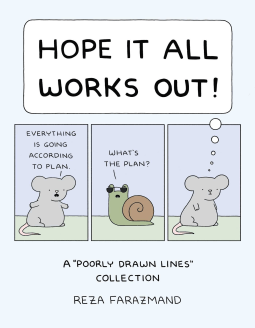
This comic collection features animals who represent human situations and feelings. The comics struck me as reflective of the times that we live in, meaning that a kind of gentle/sarcastic humor is taken from challenges of daily life and existence. These are comics for an adult audience. The title seems to perfectly reflect the book’s content.
An example to give a flavor of the comics. In this one, titled Your Issues, the characters comment on Denial, Acceptance and Exuberance. If this appeals or if the author is known to a reader, this book could be a good choice.
Many thanks to NetGalley and Andrews McMeel Publishing for this title. All opinions are my own.
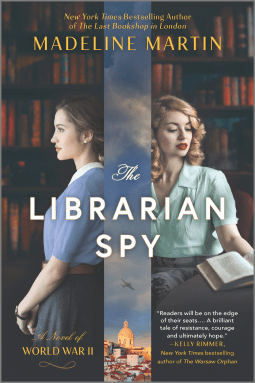
I very much enjoyed this author’s first novel, The Last Bookshop in London. I was so delighted to see that she had written a second book. This one is set during WWII as was the first.
What could be more enticing than a novel called The Librarian Spy? I couldn’t wait to open the book and then became immersed . I highly recommend this sophomore effort on Ms. Martin’s part.
This time the author has developed a plot that feels more complex than that of the first book as she follows two different woman. The Librarian Spy is Ava. When the story opens she is working at the Library of Congress in D.C. Ava very much likes her job and the feeling of security that being surrounded by books provides for her. Nonetheless, when she is tapped for a special assignment, Ava takes the new position even though it means getting on a plane, something that is highly fraught for her (readers will learn why).
Ava finds herself in Portugal. Not all readers may know that Portugal was neutral during the war. The author does a terrific job of portraying the city. There are no shortages for many while others are waiting in long lines, hoping against hope to be able to board a ship and to leave Europe. There are the many who watch others; these Portuguese and Germans leave others feeling unsafe despite the neutrality.
Ava’s job is to collect newspapers and other documents that can be transmitted to the States. She meets with a number of characters in the course of her work. Readers especially watch her relationship with the British James.
Meanwhile in France, a second plot line unfolds. This is the story of brave Elaine. Her name has been changed, because, as readers learn early in her part of the book, she gave her papers to a Jewish woman who was fleeing. She was lucky to get new ones. Now, as Elaine, she is involved with the Resistance. Elaine’s husband has been captured and readers may feel a great deal as they wait to see if he will survive the war.
Readers follow Elaine through a depleted city as she couriers, and into the woods where the maquis hide. Will she survive? Will her work change anything in the war? Will Elaine lose friends to the Germans? Finally, how will the two stories intersect?
As I have previously noted, there have been so many WWII titles published for historical fiction fans so it can be hard for any particular one to stand out. In this novel, I found that the courage of these characters moved me especially when I think about the current state of our world and the need for values and bravery in the face of challenges. I recommend this novel even within a crowded field.
Readers who have enjoyed novels by Susan Elia MacNeal and/or Anne Perry’s Elena Standish series may also want to give this title a look.
Many thanks to NetGalley and Harlequin for this title. All opinions are my own.
Pub Date 26 Jul 2022
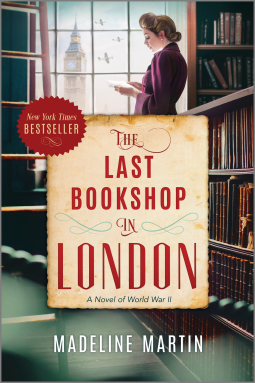
The author’s first book:
The Last Bookshop in London
A Novel of World War II
by Madeline Martin
#TheLastBookshopinLondon #NetGalley
Pub Date 06 Apr 2021
As soon as I saw the title of this book, I wanted to read it. The magic word, of course, was bookshop. I also found the cover to be very appealing. So, I initially judged this one by its cover. That said, I wasn’t disappointed.
This novel’s protagonist, Grace, is a young woman who recently lost her mother. Along with her best friend, Viv, she moves to London to stay with a family friend. The two arrive only to have war declared not long after. Viv enters one of the women’s units while Grace remains with her mother’s friend. She takes a position in a bookshop and the shop is also a character in the book.
This story points out the importance of literature. In a lovely scene, Grace goes underground during a bombing raid where she begins reading Middlemarch to those who are stuck in the shelter over night. Those stuck there look forward to additional chapters when the next call to go underground comes.
Grace organized the bookshop and develops a relationship with its curmudgeonly owner. She studies way to make the shop successful and, for example, advertises buying books to read while unable to sleep in one’s beds due to the bombings.
The author does a good job of portraying wartime Britain. There are losses of people, property, usual foods, a way of life. There are also the joys of friendship, love, books and connection.
There are so many WWII set novels being written now. My theory is that, awful as the war was, it is more reassuring to look back at that time than our current one. For all of the suffering, the reader knows that eventually Britain will declare victory.
I think that this title is worth reading. Let me know what you think!
Many thanks to NetGalley and the publisher for this title. All opinions are my own.
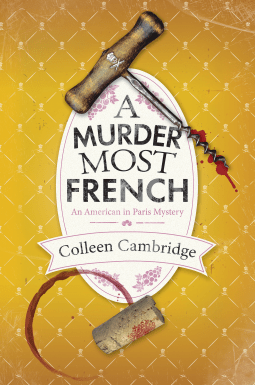
This series began with last year’s Mastering the Art of French Murder. This second title is every bit as delightful.
Here is an historical mystery set in post WWII Paris. It features a fictional protagonist, Tabitha, and a friend of hers. That friend is the larger than life Julia Child. Together the two become involved in murderous situations.
This time, chefs should beware what they drink. Not too far into the novel, two have died after imbibing what should have been very special vintages. Tabitha and Julia are on the case even if the police inspector (and possible romantic interest for Tabitha) does not want their help.
What I like best in this book (and in the first one) is the evocation of Paris. When Tabitha and Julia visit a market it is easy to visualize the food and want to start cooking. And speaking of which, every time Julia is around food, and that is often, the book is so much fun.
Highly recommended to those who are foodies, those who love Paris and those who like historical mysteries. I hope there will be a third book soon
Many thanks to NetGalley and Kensington Books for this title. All opinions are my own.
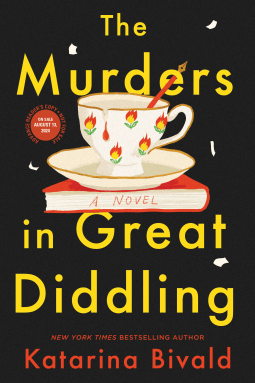
When I have the opportunity to both read and listen to a book I am happy. I can read when I am sitting and can listen when I am out and about. This synchronicity worked perfectly while I enjoyed The Murders in Great Diddling.
The cover and title give some sense of this as a British mystery and indeed it is. Great Diddling is in Cornwall. It is a community where the people who live there know one another.
The story begins when there is an outdoor tea party. Owner of a grand (if rundown) estate has invited the villagers to a tea party. This device leads to a rapid introduction to many characters for the reader.
There are the manor owner, Daphne and her assistant Margaret. There is Daphne’s difficult and disliked nephew. There are author Berit and Sally, daughter of her agent, and hopeful employee of Berit. There is a couple; James has a stake in a hotel and Penny has a stake in defending her husband. There are owners of village businesses whose doors are to be closed and others as well.
There is an explosion and in its aftermath a body is found. I will leave it to the reader to find out who the victim is. Suffice it to say, there are many with motives.
This is the lead in to a long, fun and involving story. Take the time to enjoy it. I did. Note how much there is about books, lots of books in this one as you read or listen.
I found the narration to be spot on. The reader was British and helped to create the atmosphere of the story in a delightful way.
Many thanks to NetGalley, Poisoned Pen Press and Dreamscape Audio for this title. All opinions are my own.
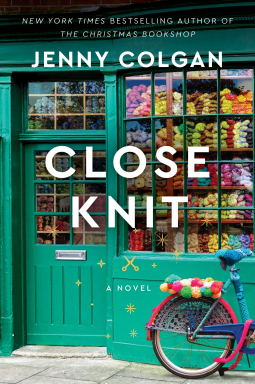
Jenny Colgan writes stories that are always enjoyable. The locations are brought to life in a way that makes me want to book a plane ticket. The characters are people with whom I want to spend time. The plots are involving and just right for a break in the day.
This time the story takes begins in very northern Scotland. Readers meet Gertie. She is an island girl who thinks that she may want something more. What will she decide? How will Callum Frost fit into the story? Pick this one up to find out.
This book is perfect for readers who want a bit of escape, especially those who also like to knit. Those who’ve read other books by the author will be delighted to meet up with some friends from the earlier novels.
Many thanks to NetGalley and Avon & Harper Voyager for this title. All opinions are my own.
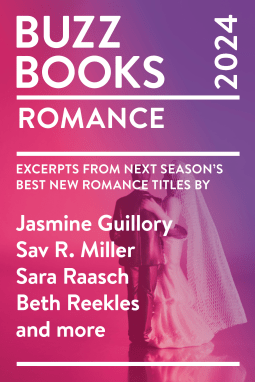
I love Buzz Books titles. They offer a terrific way to build reading lists. This edition features romance books.
This sampler is organized by type of romance; note that there are many. These categories include Contemporary, Paranormal, Post Apocalyptic, Regency, Rom-Com, Romantasy, Sci-Fi, and Sports. There is an additional section that sorts the books by age category.
For each featured book, there are a summary, a substantial excerpt, information on the author, basic book information (for example, price and pub date), and promotional information. Just a few of the authors included are Jasmine Guillory, Mia Sheridan and Sabrina Jeffries.
This title is worth a look. It will be welcomed by its target audience and may inspire some new readers to try the genre.
Many thanks to NetGalley and Publishers Lunch-Buzz Books for this title. All opinions are my own.
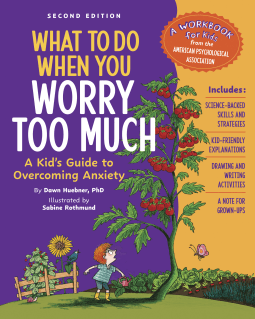
This title offers a valuable resource for children and those who care about them including family, caregivers, teachers and mental health professionals. It is an updated edition of a book about helping kids who worry.
This book is very readable and relatable. It offers helpful text and activities to help children to manage their anxieties. Huebner notes that adults often tell kids not to worry or push them forward or shield them while none of these tactics work very well. Instead, this book helps kids to understand what worry is, how it is triggered and ways to manage their fears.
This title is meant, I think, to be read with a trusted adult. Going through this book multiple times may indeed be useful. In fact even some adults may find some help in these pages.
Many thanks to NetGalley and the American Psychological Association-Magination Press for this title. All opinions are my own.
I was initially drawn to this one by the book’s title and the cover which I found very appealing. Happily, the story inside these pages also offered an enjoyable read with gorgeous locations, some good characters and an interesting plot.
Sadie was the kind of person who lived a predictable life as exemplified by her position as an actuary. Her life changes following the unexpected death of her best friend, Gemma (not too much of a spoiler as this happens very early in the book).
Sadie needs a change and purchases a bike tour company in France (now that sound pretty nice). However, of course, there are problems. These include vandalism and murder. No spoilers so hard to say much more except that this was a fun, cozy read. I hope that it is the start of a series.
Many thanks to NetGalley and Kensington Books for this title. All opinions are my own.




 Joyce's mystery and fiction book reviews with some non-fiction too!