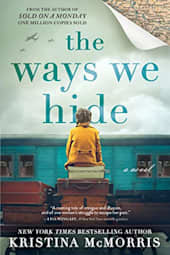
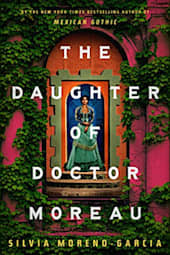
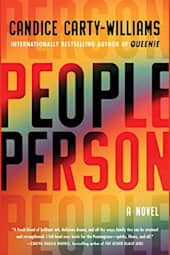
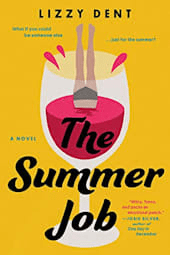
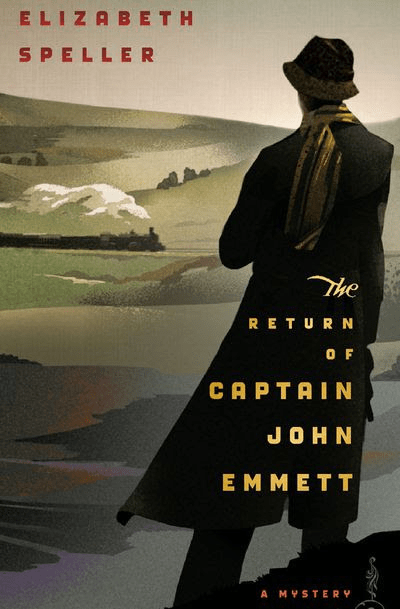
Of all of Anne Perry’s series, currently this one featuring Elena Standish is my favorite. For those who don’t know she has also written books about Thomas and Charlotte Pitt and their son Daniel Pitt has his own series. In addition, there are the Monk books, the Christmas novellas, a WWI series and some standalones. Clearly, Ms. Perry is a busy novelist.
The Elena Standish stories take place in the lead up to WWII. The period is well portrayed. Elena has been the subject of four books and, in my opinion, they just keep getting better. Readers will admire Elena. She is brave but that does not mean that she is not scared; this makes her seem quite human.
In this entry, Elena is sent back to Berlin. It is a city where she previously faced great danger so she is aware of the high stakes. Her mission is to extract a scientist who has knowledge of and works in a germ war program. Will she be successful? As this is a series, readers read hoping for the best.
I enjoyed spending time with Elena and those around her. I especially like her paternal grandparents.
It was hard for me to read this novel without thinking about current events. The germ warfare plot may make readers think of Covid. Some of the ways in which Hitler is described will (sadly) remind some of U.S. politicians. I don’t know if this perspective was intentional on the author’s part but perhaps it was.
Those who enjoy books by authors like Susan Elia MacNeal are sure to like the Ella Standish novels. Best read in order but one could dip in anywhere.
Many thanks to NetGalley and Random House Publishing Group-Ballentine for this title. All opinions are my own.
30 Courageous Visionaries Who Broke Boundaries, Made a Difference, and Paved the Way
by Bijan Bayne
#BlackTrailblazers #NetGalley
How many of the people on this book’s cover can you or a young reader that you know identify? Whatever your answer, take a look inside this title to find thirty biographies filled with inspiration. Just some of those featured in this title are Sojourner Truth, Mahalia Jackson, Martin Luther King, Jr., Oprah Winfrey Barack Obama and Kamala Harris. There were other people whose lives I learned about for the first time, for example, Ella Baker and Bessie Coleman.
Each entry features bold and appealing graphics. There is also a biography for each person.
This book will remind children that so much is possible and that, despite obstacles, there are many who have achieved great things.
This book deserves a spot in both home and school libraries. It is a wonderful and invitingly written resource.
Many thanks to Andrews McMeel Publishing and NetGalley for this title. All opinions are my own.
Many thanks to the publisher for the opportunity to be part of this blog tour!
About the book and more:
Take My Husband
Ellen Meister
On Sale Date: August 30, 2022
9780778309871
Trade Paperback
$16.99 USD
400 Pages
ABOUT THE BOOK:
A witty, insightful domestic comedy about one woman’s unexpected, thought-provoking journey out of her marriage as she realizes how much better off she would be if her husband had not survived a serious car crash.
When Laurel Appelbaum gets a call at work from the local hospital informing her that her unemployed husband Doug has been in a serious car accident, she is in shock. Summoned immediately to his bedside, she doesn’t know in what condition she will find him. As she rushes to the ER, her mind is full of dire thoughts of this abrupt and unpredictbale end to her marriage…that is until she remembers the large life insurance policy they are carrying in his name.
Suddenly Laurel can’t help but imagine what a life on her own might look like…a new little cottage perhaps, the dog she has always wanted but can’t have because of Doug’s allergies, and the money to travel to see their only son. By the time she arrives she is ready to assume the role of grieving widow, only to find Doug sitting on a gurney, annoyed that she has taken so long to come pick him up. All of the tiny assaults on her freedom and dignity that have chipped away at their marriage and her happiness over the years flood in. She realizes now that she is finally ready to journey out of her marriage because the life really at stake is her own. She just has to figure out how to do it.
ABOUT THE AUTHOR:
Ellen Meister is the author of several novels including THE ROOFTOP PARTY, LOVE SOLD SEPARATELY, DOROTHY PARKER DRANK HERE; THE OTHER LIFE and others. Ellen is also an editor, book coach, ghostwriter, and frequent contributor to Long Island Woman Magazine. She teaches creative writing at Long Island University Hutton House Lectures and previously at Hofstra University. Her latest novel is TAKE MY HUSBAND. For more info visit ellenmeister.com.
Laurel Applebaum heard a familiar ringtone as she shuffled toward the lockers at Trader Joe’s, tired and spent after a full day on her feet. Was that her phone? Her first instinct was to rush, but she stopped herself. It was probably her husband, Doug, with one of his inane emergencies, like running out of chocolate-covered almonds. God forbid he should go ten minutes without a snack.
The phone rang again, but still Laurel didn’t pick up her pace. She could have—there was always a little reserve left in the tank—but she decided to indulge in her end-of-the-day crankiness, even though she might pay for it later, when Doug started whining about his deprivations. For now, for this one moment she had to herself, it felt like a miniature vacation.
Sometimes, Laurel told herself she should get a job where she could sit all day, like her sister-in-law, who answered phones in a doctor’s office. Then Laurel would look at her co-worker Charlie Webb, who was more than twenty years her senior and the fastest cashier they had. Always smiling, he was beloved by staff and customers, and Laurel thought of him as a cross between Kris Kringle and the philosophical deathbed guy from Tuesdays With Morrie. He made her laugh. And want to be better.
By the time Laurel opened her locker, the ringing had stopped and started up again. She pulled her purse from its hook and fished out her phone. Sure enough, DOUG was on the caller ID.
“Hi,” she said wearily, hoping she conveyed enough pathos with the single syllable to elicit some sympathy.
“Laurel Applebaum?” said a woman’s voice.
A chill swept through her. Something was wrong.
“Yes?”
“I’m so glad I finally reached you. I’m calling from Plainview Hospital. Are you Douglas Applebaum’s next of kin?”
“That’s my husband,” she said, her scalp prickling, her whole body suddenly alert. An instinctive chill had her in its grip. “Is he okay? What’s wrong?”
“He was brought in by ambulance after a motor vehicle accident. We’re still assessing his condition, but he’s unconscious. Right now the doctors—”
“I’m not far,” Laurel said. “I’ll be there in ten minutes. Less.” She dropped her phone into her purse and grabbed her jacket. Dear god, was this really happening? And why did it take a near tragedy for her to remember how much she loved him?
I have to do better, she thought, a lump taking shape in her throat. I have to.
“Is everything okay?” asked Charlie Webb. He had been standing close by, which wasn’t unusual. Sweet as he was, the old guy was just this side of stalkerish when it came to Laurel.
She chalked it up to a harmless crush. To Charlie, Laurel was still in the blush of youth. But she understood that his age filtered her through a softening gauze. To most men, she was all but invisible—a fifty-two-year-old woman who maintained only the last vestiges of attractiveness. It had been at least ten years and as many pounds since anyone told her she resembled Diane Lane. Granted, she didn’t make the effort she used to, but she simply couldn’t see the point.
She looked into Charlie’s kind face. “I don’t think so,” she said, her eyes watering. “Doug’s been in an accident. They wouldn’t have called me unless…” She searched his expression, hoping she didn’t have to finish the sentence.
He nodded and took her by the shoulders. “You’re going to be okay,” he said slowly, “no matter what. You are here and you’re fine. You only have one job right now, and that’s to drive carefully. You understand?”
The cadence of his speech slowed her rocketing heart, but she was suddenly so overcome by his concern she couldn’t speak. So she gave him a quick hug, and dashed out.
Laurel slammed the door of her twelve-year-old Altima, considering Charlie’s advice as she pulled her seat belt across her torso. Drive Carefully, she thought, turning the words into initials. It was something she often did to settle herself, playing a game where she tried to think of famous people to match the letters. DC=Don Cheadle, Dana Carvey, Diahann Carroll.
Calmer, she realized Charlie was right—she didn’t need to tear out of the lot. Reaching the hospital two minutes faster was not going to make a difference. Because realistically, she thought as the bulge in her throat swelled and tightened, Doug was probably already dead. She could almost feel it in her bones. He was gone, the life snuffed from his body. That was why she had been summoned. The hospital probably had a policy against giving next of kin the news over the phone.
Once she got there, she would be pulled into a private room by a doctor and a social worker. They would tell her they did everything they could, and ask if there was anyone they could call for her. She thought about her mother, elderly and detached, who would be no help at all. Then, of course, there was Doug’s sister, Abby, who was just the opposite. She would want to push in and take over.
Laurel bristled at the thought as her salty tears began to dry on her face, contracting the skin on her cheeks. Abby. God, she was annoying. The woman had an answer for everything. And usually, it was wrong. Maybe Laurel wouldn’t call her right away.
But no, Abby could be helpful if she stayed in her damned lane. Laurel would just have to be strong, assertive. She would give Abby a list of people to call. That would make her feel useful and important. Keep her out of Laurel’s hair.
And then, well, Laurel would have to make the most difficult call of all—to her son, Evan, who lived on the West Coast and was expecting his first child. He’d want to fly to Long Island for the funeral, but what about his wife, Samara? She was having a difficult pregnancy and might not be allowed to fly. Maybe Evan wouldn’t even feel comfortable leaving her.
It was painful to consider, and Laurel shook her head. She was making this too complicated. Of course they would both come to the funeral.
The thought of seeing them lightened her heart. She’d been depressed about not being able to fly out there for the birth of their child. Money was just so tight, with Doug still out of work. And he had insisted it was foolish for them to get any further in the hole on their credit cards. But now…now she’d be free to buy a ticket without getting into a fight about it. At least there was that. She would finally get her wish of being there for the birth of her first grandchild, to hell with credit card debt.
And then Laurel had a thought that made her gasp. She hadn’t remembered it until this moment. Doug had a huge life insurance policy—$850,000. So much money! It would solve everything. She’d be able to pay off all the credit cards. She could sell the house, and move to a cute little apartment, all by herself, and live off the savings. My place, she would call it. The decor would be soft and cool, in shades of aquamarine and sand. She imagined getting up in the morning without thinking about making Doug breakfast, setting out his vitamins and medication, picking up his damp towels from the bathroom floor, washing the dishes he left in the sink, swiping his crumbs off the counter. There were always so many damned crumbs. But now, she might even get a little dog. Doug was allergic so she had never been able to, and the thought of it filled her.
Laurel stretched in the seat, thinking how lovely it would be to quit the long shifts at Trader Joe’s and give her aching back a rest. And with no job, she would be able to stay home with a new puppy to train it.
And then there was her mother, who desperately wanted Laurel to spend more time with her. This could be just what their relationship needed. Laurel imagined her mother being so grateful for the extra attention she might even summon the courage to take a break from her vintage doll collection and leave the house. Laurel warmed at the thought, the tension in her throat easing.
And of course, that would be nothing compared to holding her first grandchild. How she loved newborns! Their impossibly tiny noses, their kernel-sized toes, the smell of heat rising off their velvety little heads. She imagined a baby girl with Evan’s silky dark hair.
By the time she parked at the hospital, Laurel was trying to work out whether it made sense to get a dog right away, or if she should wait until after the birth of the baby, so she wouldn’t need to worry about finding someone to care for it while she was in California.
She stopped the thought in its tracks. This wasn’t about her, it was about Doug, and she needed to be sadder. He was her husband. They had been married for nearly thirty years. Laurel tried to picture the early days of their courtship, recalling when they first met. She had just landed her first real job, working in the marketing department of a trade magazine publisher, when one of the women in her office offered to fix her up with a friend of her husband’s. “A solid citizen,” the woman had said, and Laurel took it to mean he was someone she could trust.
The phrase stuck with her all these years because it had defined Doug from their very first meeting. He was an honest and decent man who had gone into his father’s business. Eight years older than Laurel, he had a boyish face, unruly hair that charmed her, and an irresistibly corny sense of humor. Even on that first date, she didn’t mind that he was overweight. It made her feel safe to be with someone who wasn’t all that attractive to other women. Here was a man who would always be faithful. And also, he thought he was the luckiest guy in the world to be dating someone so very pretty. She was even flattered by his jealousy. It made her feel like a princess.
When he proposed six months later, Laurel was dizzy with joy. She was young—barely twenty-two—but she had always dreamed of being a wife. And she was being offered a sparkling emerald cut diamond solitaire ring by a man who wanted her so desperately he couldn’t wait to make it official. She’d been so overcome she could barely choke out the word yes.
Laurel parked and pulled a tissue from her purse, well aware of what she was doing—digging into memories to feel appropriately sad. It worked. Her heart felt leaden as she slammed her car door and hurried to the emergency room entrance.
“I got a call about my husband, Douglas Applebaum,” she said to the woman at the desk. “He was…in an accident.” She arranged her face into a stoic expression so the receptionist would understand she was prepared for whatever bad news was about to unfold.
But the woman remained impassive as she tapped at her computer, asked for ID, and then printed out an adhesive name badge. “Observation unit 4B,” she said, handing it to Laurel.
“What?” Laurel asked, confused. She had expected someone to come out and greet her.
The woman pointed a long nail embedded with a diamond chip. “Straight down that hall, all the way to the end. Make a right, show your badge to the security guard.”
For a lingering moment, Laurel stood transfixed by the glamorous manicure, a covetous urge growing tight in her gut. She hid her raw, unmanicured hands behind her back as she recalled better days, when she would indulge in mani-pedis with her friend Monica, as they laughed and gossiped.
And then, just like that, the nostalgia was replaced with furious reproach. How could she possibly be so shallow? Especially now, when there was so much at stake.
Guilt brought her back to the present, where she tried to focus on the instructions she had just been given. Dazed, Laurel did as she was asked, going through door after door until she found herself in a room full of patients in reclining chairs, separated by curtains. Some were alone, others had a loved one sitting close by in a plastic seat, crowded into the tiny space. Medical professionals buzzed around the middle of the room, going from patient to patient. The air was too hot, and smelled like disinfectant.
Laurel followed the signs. 1B, 2B, 3B, and then she stood before 4B, where two nurses in lavender scrubs hovered over a patient, blocking her view. One was leaning across him, pulling off a Velcro blood pressure cuff, and the other adjusted a bag of clear liquid hanging on an IV pole. The patient said something to make both nurses laugh, and then they took a step back, as if sensing Laurel’s presence.
And there he was, lounging in the reclining chair, a purple bruise across his forehead.
Laurel stopped and blinked, taking it in. The IV bag was connected to his arm by a thin tube. He wore the faded plaid shirt she’d been trying to get him to throw out, his belly hanging over his belt.
“Doug?” she asked, trying to make sense of the tableau before her. There was, she knew a term for what she was experiencing. Cognitive dissonance. Still, she couldn’t understand what she was looking at. That is, until he spoke.
We were several months into the pandemic and I was hard at work on another novel, when my husband burst into my office without knocking to tell me he’d heard a rumor that a toilet paper shipment had arrived at our local supermarket.
Thrilled as I was by this news, I was distraught by the distraction. As I turned back to my computer to try to find my train of thought, I was startled by yet another disruption. This time, it was my muse feeding me a new novel idea: a happily married woman wants to throttle her husband.
Oh, come on, I argued. That’s not a novel idea—that’s just the twisted thought of a writer at the end of her rope. But my muse was insistent. This was a book!
What is your favorite part of writing?
I love when I put together two characters with conflicting goals, and allow them to battle it out. Those scenes are always the most dynamic. And I’m so often surprised by what they say!
What is your writing process?
I love the advice to give yourself the freedom to write a messy first draft, but for me, it just doesn’t work. I’m a very plodding, meticulous, and okay—anal—writer. I have to polish every paragraph to a shine before I can move on. It might not be the most efficient way to work—especially since it can be so heartbreaking to tear apart such careful work when I need to revise—but it’s the way my brain functions.
What advice do you have for aspiring authors?
As you can probably tell from my previous answer, I firmly believe that you have to focus on what works for you. If you’re the type of writer who can get down a messy first draft and revise later, great. If you’re like me, and need to rewrite as you go along, that’s fine, too.
But that’s about process. My advice on storytelling is more stringent. It’s imperative that you can identify your main character’s goal, as that’s the engine that will drive your story.
What is your best vacation spot?
These days, it’s someplace remote and isolated that doesn’t require air travel. (Can you tell I’m still traumatized by the pandemic?)
What book are you reading now?
I just finished Nancy Johnson’s brilliant THE KINDEST LIE, and have started Jonathan Vatner’s engaging THE BRIDESMAIDS UNION.
Are you going on a tour for this book?
I’m launching the book with a live event on August 31st at Theodore’s, a new independent bookstore here on Long Island. But the bulk of the touring for this book will be virtual.
What is the best way for readers to keep up with you?
This historical mystery takes place in Cracow in the late 1800s. Socialite Zofia’s maid seems to be missing. What has happened to Karolina? What will it be like for Zofia to go outside of her comfortable existence to try to find out? Suffice it to say that she learns a great deal about the less salubrious aspects of life in her city.
This is the second book in a series following on Mrs. Mohr goes missing. Its story is told with flair and humor. It also casts an eye on the roles of women during the time period.
Karolina and the Torn Curtain is a book that I can confidently recommend. Many thanks to NetGalley and Houghton Mifflin Harcourt for this title. All opinions are my own.
Pub Date 23 Mar 2021
Editorial Reviews
Review
“Brings Cracow vividly to life and presents the period’s views on women with sly wit. This mystery will please readers looking for an unusual amateur sleuth and a picturesque setting.”– “Publishers Weekly”
“Moira Quirk’s performance of this novel, set in 1895 Kracow, bristles with period politics and feminist viewpoints while offering a complex mystery and an appealing heroine…Quirk handles the Polish names and places with ease, adding atmosphere to Szymiczkowa’s original plotting…Quirk deftly delivers all the subtleties, conflicting attitudes, and even bits of humor in this unusual mystery.”– “AudioFile”
“An ingenious marriage of comedy and crime.” — “Olga Tokarczuk, Nobel laureate”–This text refers to the audioCD edition.
Here is a new entry in this ongoing and excellent series for kids. This time they will spend time with Nikola Tesla. Children will learn about his fondness for his cat and also his scientific accomplishments and ideas. Learn why AC is important to electricity and find out who wanted to meet Tesla.
This book has colorful illustrations. Again, meet the cat and see what this inventor could do with electricity.
Many thanks to NetGalley and Quarto Publishing Group-Frances Lincoln Children’s Books for this title. All opinions are my own.
a good look at therapyI’ve reviewed this one.an early series by the popular authorI reviewed this one. Compare it with Jojo Moyes take on this topic.Reviewed on my site.
So delighted to be part of this title’s blog tour! I so enjoy historical fiction. Many thanks to HTP, Sophie James and Justine Sha for this opportunity.
SHAUNNA J. EDWARDS has a BA in literature from Harvard College and a JD from NYU School of Law. A former corporate lawyer, she now works in diversity, equity and inclusion. She is a native Louisianian, raised in New Orleans, and currently lives in Harlem with her husband. The Thread Collectors is her first novel. Find her on Instagram, @shaunnajedwards.
ALYSON RICHMAN is the USA Today and #1 international bestselling author of several historical novels, including The Velvet Hours, The Garden of Letters, and The Lost Wife, which is currently in development for a major motion picture. Alyson graduated from Wellesley College with a degree in art history and Japanese studies. She is an accomplished painter and her novels combine her deep love of art, historical research, and travel. Alyson’s novels have been published in twenty-five languages and have reached bestseller lists both in the United States and abroad. She lives on Long Island with her husband and two children, where she is currently at work on her next novel. Find her on Instagram, @alysonrichman.
Book Summary:
“An unforgettable story of female strength, hope and friendship. This collaborative work is magnificent—a true revelation!” —Pam Jenoff, New York Times bestselling author of The Woman with the Blue Star “A brilliant story brimming with unexpected friendships and family ties. Historically sound and beautifully stitched, The Thread Collectors will stay with you long after the last page is turned.” —Sadeqa Johnson, international bestselling author of Yellow Wife
1863: In a small Creole cottage in New Orleans, an ingenious young Black woman named Stella embroiders intricate maps on repurposed cloth to help enslaved men flee and join the Union Army. Bound to a man who would kill her if he knew of her clandestine activities, Stella has to hide not only her efforts but her love for William, a Black soldier and a brilliant musician.
Meanwhile, in New York City, a Jewish woman stitches a quilt for her husband, who is stationed in Louisiana with the Union Army. Between abolitionist meetings, Lily rolls bandages and crafts quilts with her sewing circle for other soldiers, too, hoping for their safe return home. But when months go by without word from her husband, Lily resolves to make the perilous journey South to search for him.
As these two women risk everything for love and freedom during thebrutal Civil War, their paths converge in New Orleans, where an unexpected encounter leads them to discover that even the most delicate threads have the capacity to save us. Loosely inspired by the authors’ family histories, this stunning novel will stay with readers for a long time.
Try it:
New Orleans, Louisiana March 1863
She opens the door to the Creole cottage just wide enough to ensure it is truly him. Outside, the pale moon is high in the sky, illuminating only half of William’s face. Stella reaches for his sleeve and pulls him inside.
He is dressed to run. He wears his good clothes, but has chosen his attire thoughtfully, ensuring the colors will camouflage in the wilderness that immediately surrounds the city. In his hand, he clasps a brown canvas case. They have only spoken in whispers during their clandestine meetings about his desire to fight. To f lee. The city of New Orleans teeters on the precipice of chaos, barely contained by the Union forces occupying the streets. Homes abandoned. Businesses boarded up. Stella’s master comes back from the front every six weeks, each time seeming more battered, bitter and restless than the last.
William sets down his bag and draws Stella close into his chest, his heartbeat accelerating. He lifts a single, slim finger, slowly tracing the contours of her face, trying to memorize her one last time.
“You stay here, no matter what…” he murmurs into her ear. “You must keep safe. And for a woman like you, better to hide and stay unseen than venture out there.”
In the shadows, he sees her eyes shimmer. But she balances the tears from falling, an art she had been taught long ago—when she learned that survival, not happiness, was the real prize.
Stella slips momentarily from William’s arms. She tiptoes toward a small wooden chest. From the top drawer, she retrieves a delicate handkerchief with a single violet embroidered in its center. With materials in the city now so scarce, she has had to use the dark blue thread from her skirt’s hem to stitch the tiny flower on a swatch of white cotton cut from her petticoat.
“So you know you’re never alone out there,” she says as she closes William’s fingers around the kerchief.
He has brought something for her, too. A small speckled cowrie shell that he slips from a worn indigo-colored pouch. The shell and its cotton purse are his two most sacred possessions in the world. He puts the pouch, now empty, back into his pocket.
“I’ll be coming back for that, Stella.” William smiles as he looks down at the talisman in his beloved’s hand. “And for you, too… Everything will be different soon.”
She nods, takes the shell and feels its smooth lip against her palm. There was a time such cowries were used as a form of currency for their people, shells threaded on pieces of string exchanged for precious goods. Now this shell is both worthless and priceless as it’s exchanged for safekeeping between the lovers.
There is no clock in her small home. William, too, wears
no watch. Yet both of them know they have already tarried too long. He must set out before there is even a trace of sunlight and, even then, his journey will be fraught with danger.
“Go, William,” she says, pushing him out the door. Her heart breaks, knowing the only protection she can offer him is a simple handkerchief. Her love stitched into it by her hand.
He leaves as stealthily as he arrived, a whisper in the night. Stella falls back into the shadows of her cottage. She treads silently toward her bedroom, hoping to wrap herself tightly in the folds of the quilt that brings her so much comfort.
“You alright?” A soft sound emerges in the dark.
“Ammanee?” Stella’s voice breaks as she says the woman’s name.
“Yes, I’m here.” Ammanee enters the room, her face brightened by a small wax candle in her grip.
In the golden light, she sits down on the bed and reaches for Stella’s hand still clutching the tiny shell, which leaves a deep imprint in her palm.
“Willie strong,” Ammanee says over and over again. “He gon’ make it. I know.”
Stella doesn’t answer. A flicker of pain stabs her from the inside, and she finally allows her tears to run.