Great reads for adults and children!


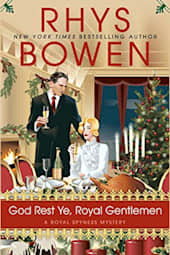
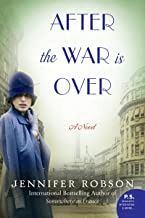
This is the fourth book in the author’s enjoyable historical mystery series. Readers who already know Sparks and Bainbride will be happy to again spend time with them and their agency.
For those who don’t know, the two women, one a former intelligence agent and the other, a war widow, run a Marriage Bureau. Sparks and Bainbridge are quite different people but they successfully share this business. The idea of a marriage bureau as a setting is quite clever in my opinion.
The time period of the novel is post WWII. The setting is England. This time Iris Sparks is approached by someone who has a tie to a person from her past. At the same time, Gwendolyn is trying to straighten out some issues from her own life. In addition to all of this, of course, there is a murder that needs to be solved.
A strength of this series is its protagonists and their backstories. I very much enjoyed reading about Iris and Gwendolyn.
Those who enjoy historical fiction and mysteries will do well to look at this. series. After reading this novel, readers may then want to work their way through all of the novels, even as they wait eagerly for book number five.
Many thanks to NetGalley and St. Martin’s Press-Minotaur for this title. All opinions are my own.
Pub date: 26 July 2022

I have read many books by Susan Wiggs. In my opinion, this title is different from others, including the Lakeshore Chronicles, that I have read.
This book begins in an engaging way and I was drawn right in. Readers get to know many who live or work on Perdita Street, the location of the author’s book of last year. One of these characters, Margot, is a largely self-made woman who owns her own restaurant. She has carefully chosen its location and is eager for this barbecue restaurant to be a success.
Margot’s restaurant shares a kitchen with a bakery. She therefore gets to know Ida B (yes, like Wells) and her son Jerome. Readers will like both of them.
Readers learn about each of these character’s early years. Margot was very close to her mother but was left on her own too soon. A couple who own a restaurant gave her a start and she ran with it.
Ida B had a love affair when she was a teen. This relationship led to Jerome’s birth. Her backstory will, I think, be a part of the book that will draw readers in. Jerome, is an adult as the story opens. He is a divorced single dad. Will he and Margot get together?
In this novel, I think that Ms. Wiggs had a kind of Jodi Picoult moment as she chose to address some very difficult issues. Some of these have to do with race while one big part of the plot has to do with what happened to Margot, then Margie, at an earlier stage in her life.
This story was moving along and then a section comes that is about what happened to Margie/Margot when she got involved with a young man in her town. This relationship sours. In this part of the novel, there is graphic sexual and physical violence. Margie’s effort to protect herself with its ramifications and her subsequent experiences in prison may be hard for some to read.
I found myself engaged with the characters and wanting the best for them. I was hoping for that happy ending as I turned the pages.
Fans of Susan Wiggs will most likely want to read this book. Those who like women’s fiction and are willing to look at hard issues may also enjoy this one.
Many thanks to NetGalley and William Morrow for this title. All opinions are my own.
Pub date: 26 July 2022


POINT LAST SEEN
Author: Christina Dodd
ISBN: 9781335623973
Publication Date: June 21, 2022
Publisher: HQN Books
Buy Links:
Social Links:
Twitter: @ChristinaDodd
Facebook: Christina Dodd
Instagram: @christinadoddbooks
Author Bio:
New York Times bestselling author Christina Dodd writes “edge-of-the-seat suspense” (Iris Johansen) with “brilliantly etched characters, polished writing, and unexpected flashes of sharp humor that are pure Dodd” (ALA Booklist). Her fifty-eight books have been called “scary, sexy, and smartly written” by Booklist and, much to her mother’s delight, Dodd was once a clue in the Los Angeles Times crossword puzzle. Enter Christina’s worlds and join her mailing list at http://www.christinadodd.com.
Book Summary:
From New York Times bestselling author Christina Dodd comes a brand new, standalone suspense about a reclusive artist who retrieves a seemingly dead woman from the Pacific Ocean…only to have her come back to life with no memory of what happened to her. With a strong female protagonist, a chilling villain, and twisty secrets that will keep you turning the pages. Perfect for fans of Lisa Jewell, Karin Slaughter and Sandra Brown, POINT LAST SEEN, will have readers keeping the lights on all night.
LIFE LAST SEEN
When you’ve already died, there should be nothing left to fear… When Adam Ramsdell pulls Elle’s half-frozen body from the surf on a lonely California beach, she has no memory of what her full name is and how she got those bruises ringing her throat.
GIRL LAST SEEN
Elle finds refuge in Adam’s home on the edge of Gothic, a remote village located between the steep lonely mountains and the raging Pacific Ocean. As flashes of her memory return, Elle faces a terrible truth—buried in her mind lurks a secret so dark it could get her killed.
POINT LAST SEEN
Everyone in Gothic seems to hide a dark past. Even Adam knows more than he will admit. Until Elle can unravel the truth, she doesn’t know who to trust, when to run and who else might be hurt when the killer who stalks her nightmares appears to finish what he started…
two
A Morning in February
Gothic, California
The storm off the Pacific had been brutal, a relentless night of cold rain and shrieking wind. Adam Ramsdell had spent the hours working, welding and polishing a tall, heavy, massive piece of sculpture, not hearing the wailing voices that lamented their own passing, not shuddering when he caught sight of his own face in the polished stainless steel. He sweated as he moved swiftly to capture the image he saw in his mind, a clawed monster rising from the deep: beautiful, deadly, dangerous.
And as always, when dawn broke, the storm moved on and he stepped away, he realized he had failed.
Impatient, he shoved the trolley that held the sculpture toward the wall. One of claws swiped his bare chest and proved to him he’d done one thing right: razor-sharp, it opened a long, thin gash in his skin. Blood oozed to the surface. He used his toe to lock the wheels on the trolley, securing the sculpture in case of the occasional California earth tremor.
Then with the swift efficiency of someone who had dealt with minor wounds, his own and others’, he found a clean towel and stanched the flow. Going into the tiny bathroom, he washed the site and used superglue to close the gash. The cut wasn’t deep; it would hold.
He tied on his running shoes and stepped outside into the short, bent, wet grass that covered his acreage. The rosemary hedge that grew at the edge of his front porch released its woody scent. The newly washed sunlight had burned away the fog, and Adam started running uphill toward town, determined to get breakfast, then come home to bed. Now that the sculpture was done and the storm had passed, he needed the bliss of oblivion, the moments of peace sleep could give him.
Yet every year as the Ides of March and the anniversary of his failure approached, nightmares tracked through his sleep and followed him into the light. They were never the same but always a variation on a theme: he had failed, and in two separate incidents, people had died…
The route was all uphill; nevertheless, each step was swift and precise. The sodden grasses bent beneath his running shoes. He never slipped; a man could die from a single slip. He’d always known that, but now, five years later, he knew it in ways he could never forget.
As he ran, he shed the weariness of a long night of cutting, grinding, hammering, polishing. He reached the asphalt and he lengthened his stride, increased his pace.
He ran past the cemetery where a woman knelt to take a chalk etching of a crumbling headstone, past the Gothic Museum run by local historian Freya Goodnight.
The Gothic General Store stood on the outside of the lowest curve of the road. Today the parking lot was empty, the rockers were unoccupied, and the store’s sixteen-year-old clerk lounged in the open door. “How you doing, Mr. Ramsdell?” she called.
He lifted his hand. “Hi, Tamalyn.”
She giggled.
Somehow, on the basis of him waving and remembering her name, she had fallen in love with him. He reminded himself that the dearth of male teens in the area left him little competition, but he could feel her watching him as he ran past the tiny hair salon where Daphne was cutting a local rancher’s hair in the outdoor barber chair.
His body urged him to slow to a walk, but he deliberately pushed himself.
Every time he took a turn, he looked up at Widow’s Peak, the rocky ridge that overshadowed the town, and the Tower, the edifice built by the Swedish silent-film star who in the early 1930s had bought land and created the town to her specifications.
At last he saw his destination, the Live Oak, a four-star restaurant in a one-star town. The three-story building stood at the corner of the highest hairpin turn and housed the eatery and three exclusive suites available for rent.
When Adam arrived he was gasping, sweating, holding his side. Since his return from the Amazon basin, he had never completely recovered his stamina.
Irksome.
At the corner of the building, he turned to look out at the view.
The vista was magnificent: spring-green slopes, wave-battered sea stacks, the ocean’s endless surges, and the horizon that stretched to eternity. During the Gothic jeep tour, Freya always told the tourists that from this point, if a person tripped and fell, that person could tumble all the way to the beach. Which was an exaggeration. Mostly.
Adam used the small towel hooked into his waistband to wipe the sweat off his face. Then disquiet began its slow crawl up his spine.
Someone had him under observation.
He glanced up the grassy hill toward the olive grove and stared. A glint, like someone stood in the trees’ shadows watching with binoculars. Watching him.
No. Not him. A peregrine falcon glided through the shredded clouds, and seagulls cawed and circled. Birders came from all over the word to view the richness of the Big Sur aviary life. As he watched, the glint disappeared. Perhaps the birder had spotted a tufted puffin. Adam felt an uncomfortable amount of relief in that: it showed a level of paranoia to imagine someone was watching him, but…
But. He had learned never to ignore his instincts. The hard way, of course.
He stepped into the restaurant doorway, and from across the restaurant he heard the loud snap of the continental waiter’s fingers and saw the properly suited Ludwig point at a small, isolated table in the back corner. Adam’s usual table.
Before Adam took a second step, he made an inventory of all possible entrances and exits, counted the number of occupants and assessed them as possible threats, and evaluated any available weapons. An old habit, it gave him peace of mind.
Three exits: front door, door to kitchen, door to the upper suites.
Mr. Kulshan sat by the windows, as was his wont. He liked the sun, and he lived to people-watch. Why not? He was in his midnineties. What else had he to do?
In the conference room, behind an open door, reserved for a business breakfast, was a long table with places set for twenty people.
A young couple, tourists by the look of them, held hands on the table and smiled into each other’s eyes.
Nice. Really nice to know young love still existed.
There, her back against the opposite wall, was an actress. Obviously an actress. She had possibly arrived for breakfast, or to stay in one of the suites. Celebrities visits happened often enough that most of the town was blasé, although the occasional scuffle with the paparazzi did lend interest to the village’s tranquil days.
She wasn’t pretty. Her face was too angular, her mouth too wide, her chin too determined. She was reading through a stack of papers and using a marker to highlight and a ballpoint to make notes… And she wore glasses. Not casual I need a little visual assistance glasses. These were Coke-bottle bottoms set in lime-green frames.
Interesting: Why had an actress not had laser surgery? Not that it mattered. Behind those glasses her brown eyes sparked with life, interest and humor, although he didn’t understand how someone could convey all that while never looking up. She had shampoo-commercial hair—long, dark, wavy, shining—and when she caught it in her hand and shoved it over one shoulder, he felt his breath catch.
A gravelly voice interrupted a moment that had gone on too long and revealed too clearly how Adam’s isolation had affected him. “Hey, you. Boy! Come here.” Mr. Kulshan beckoned. Mr. Kulshan, who had once been tall, sturdy and handsome. Then the jaws of old age had seized him, gnawed him down to a bent-shouldered, skinny old man.
Adam lifted a finger to Ludwig, indicating breakfast would have to wait.
Ludwig glowered. Maybe his name was suggestive, but the man looked like Ludwig van Beethoven: rough, wild, wavy hair, dark brooding eyes under bushy eyebrows, pouty lips, cleft in the chin. He seldom talked and never smiled. Most people were afraid of him.
Adam was not. He walked to Mr. Kulshan’s table and took a seat opposite the old man. “What can I do for you, sir?”
“Don’t call me sir. I told you, call me K.H.”
Adam didn’t call people by their first names. That encouraged friendliness.
“If you can’t do that, call me Kulshan.” With his fork, the old guy stabbed a lump of breaded something and handed it to Adam. “What do you think this is?”
Adam had traveled the world, learned to eat what was offered, so he took the fork, sniffed the lump and nibbled a corner. “I believe it’s fried sweetbread.”
Mr. Kulshan made a gagging noise. “My grandmother made us eat sweetbread.” He bit it off the end of the fork. “This isn’t as awful as hers.” With loathing, he said, “This is Frenchie food.”
“Señor Alfonso is Spanish.”
Mr. Kulshan ignored Adam for all he was worth. “Next thing you know, this Alfonso will be scraping snails off the sidewalk and calling it escargots.”
“Actually…” Adam caught the twinkle in Mr. Kulshan’s eyes and stood. “Fine. Pull my chain. I’m going to have breakfast.”
Mr. Kulshan caught his wrist. “Have you heard what Caltrans is doing about the washout?” He referred to the California Department of Transportation and their attempts to repair the Pacific Coast Highway and open it to traffic.
“No. What?”
“Nothing!” Mr. Kulshan cackled wildly, then nodded at the actress. “The girl. Isn’t she something? Built like a brick shithouse.”
Interested, Adam settled back into the chair. “Who is she?”
“Don’t you ever read People magazine? That’s Clarice Burbage. She’s set to star in the modern adaptation of Shakespeare’s…um…one of Shakespeare’s plays. Who cares? She’ll play a king. Or something. That’s the script she’s reading.”
Clarice looked up as if she’d heard them—which she had, because Mr. Kulshan wore hearing aids that didn’t work well enough to compensate for his hearing loss—and smiled and nodded genially.
Mr. Kulshan grinned at her. “Hi, Clarice. Loved you in Inferno!”
“Thank you, K.H.” She projected her voice so he could hear her.
Mr. Kulshan shot Adam a triumphant look that clearly said See? Clarice Burbage calls me by my first name.
The actress-distraction was why the two men were surprised when the door opened and a middle-aged, handsome, casually dressed woman with cropped red hair walked in.
Mr. Kulshan made a sound of disgust. “Her.”
Excerpted from Point Last Seen by Christina Dodd. Copyright © 2022 by Christina Dodd. Published by arrangement with Harlequin Books S.A.


Find this at your e book retailer. There is a new Vera novel coming soon.
The Rising Tide will be released on September 6th!
He was trained by the maximalist decorator Dorothy Draper, who favored bold colors, and he inherited her aversion to the bland and the beige.
— Read on www.nytimes.com/2022/07/24/style/carleton-varney-dead.html
I reviewed the reissue of his book. Readers of The Grand Design may also want to take a look.


I love reading historical fiction so was beyond thrilled when the publisher offered me an ARC of this title. To be sure, this book did NOT disappoint.
Just about everyone knows the arc (apologies for the pun) of Joan’s story…but, who was she before she was burned at the stake? What led her to lead armies? What happened in Joan’s personal life (there were difficulties) that led to the path that she undertook?
In this novel, Joan, starting at age ten, and her time period are brought to remarkable life. Readers will be immersed in a time and place that will leave a deep impression. Joan, too, will be someone that the reader will be honored to know.
I recently heard the author interviewed on NPR. Look for this if you can. She speaks of how the story was characterized, why she ended it where she did, and how elements from her own life influenced her writing.
Lovers of historical fiction, this may be your book of 2022.
Many thanks to NetGalley and Random House Publishing Group for this title. All opinions are my own.
Pub date: 05 Jul 2022

![]() | ![]() | ![]() |
|---|---|---|
“In this compelling novel, Katherine J. Chen presents her vision of Joan of Arc: one of courage, resilience, vulnerability and passion. This is a beautifully written novel that will have you thinking about this iconic woman in new and complex ways.”—Ms. Magazine
“An epic take on the life of Joan of Arc, Chen’s Joan reimagines the martyr as a secular, fierce, intelligent young warrior and woman, humanized and ripe for our time.”—Parade
“We all know the story of teenage Joan of Arc, who was burned at the stake by the English, but this electrifying novel fleshes her out as a passionate young woman who defied convention (and then some!). A vivid and very real slice of historical fiction that tears along towards her fateful ending.” —Good Housekeeping (UK)

This book shows its young audience many famous landmarks from different parts of the world. Under the guise of bringing photos for the Little Prince’s special flower, who does not feel well, The Little Prince travels to Rio, Paris, London, New York and other famous cities. In each entry there are descriptions of well known landmarks.
This book is a simple way to introduce young children to some of the wonders of our world. They may not always be interested in all the facts at once but can come back to this title many times.
Many thanks to NetGalley and Chouette Publishing for this title. All opinions are my own.
Pub Date 04 Oct 2022

I enjoyed this author’s earlier title, The Woman Before Wallis, so I was eager to read this book. I can confidently recommend this novel.
This time, as can be told by the book’s title, readers are transported to Imperialist Russia and the Romanov family. The reader’s guide in this world is the Czar’s oldest daughter.
Many aspects of the family’s life that are familiar to history buffs are here. There is the family’s sheltered and luxurious existence along with the prince with hemophilia and, of course, Rasputin.
Readers know the eventual fate of the Romanovs. Still, when reading this tile, they will perhaps learn things that they did not know. For example, Olga nursed soldiers and, as a young girl, had her dreams of romance.
Those who enjoy historical fiction will want to take a look at this title.
Many thanks to NetGalley and Harlequin Trade Publishing for this title. All opinions are my own.
Pub date: February 2022
![From the author of The Woman Before Wallis... [a] sweeping novel on Imperial Russia and the Romanovs](https://m.media-amazon.com/images/S/aplus-media-library-service-media/9ad9e2f1-d99e-429a-803b-abc70afa9bf6.__CR0,0,970,300_PT0_SX970_V1___.jpg)
![]() | ![]() | ![]() |
|---|---|---|