I have long enjoyed reading mysteries set in Scotland so was very interested when this title came to my attention. Fans of police procedurals may also want to read this one.
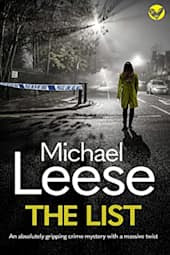
The story is set in 1970s Edinburgh where Helen Carter is a women on the police force. Of course, given the time and culture, she is not always treated with respect. Nonetheless, Helen is assigned to a murder that took place in an old theater. There is an interesting calling card next to the victim. What will happen in solving the case? For one thing, more than one murder takes place as readers follow the investigation.
This is the first in a series. Keep an eye out for the following ones. Right now this book is just ninety-nine cents on Amazon so definitely worth a try.
This title can be contrasted with Val McDermid’s 1979. Both feature women in what was then called a “man’s world,” both are set in Scotland and both involve crimes.
Many thanks to NetGalley and the publisher. All opinions are my own.
Hooray to the publisher for deciding to reissue the Nigel Strangeways mysteries, of which this is the sixth. I adored them when I read them a number of years ago. I enjoyed spending time with Nigel and also with the women in his life over the course of the books.
The novels were written under a pen name. Nicholas Blake was Cecil Day-Lewis, a well regarded poet. This background comes through in the language and writing of the stories.
In this one, mayhem is occurring at a holiday camp. Are these practical jokes or is worse to come? Solve the case with Nigel in this story written in 1940.
Many thanks to NetGalley and the publisher. All opinions are my own.
This is the story of what happens in the aftermath of a decision that mother, Claire, desperately wishes that she could take back. Not a spoiler because this is learned early in the novel…Claire, a busy mom and medical student, pulls into a gas station when she feels unwell. Her mistake is to leave her two sleeping children in the car. When she gets back to her vehicle her children are missing. What happened? Will they be found? How/can Claire live with herself? Read this one to find out. You will care about the characters.
Many thanks to NetGalley and the publisher. All opinions are my own.
I am not yet in my eighties but hope to be one day as I cannot bear to think of the alternative. Many fear this stage of life but Doctor Esty will help readers to anticipate, move through this stage and have a life that can include joy and meaning.
The book’s chapters cover a wide range of topics. A few of these include Dementia, Spirituality and Unexpected Happiness. Readers experience these topics with the benefit of the interviews conducted by the author.
In addition to its audience of eighty somethings this book could also be usefully read by adult children or others who have relationships with those in this age bracket. It will help them to understand its unique place in the life cycle.
Many thanks to NetGalley and the publisher. All opinions are my own.
#TheMagnoliaPalace #NetGalley Pub Date 25 Jan 2022
City residents and/or tourists have surely passed the Frick museum on Fifth Avenue many times. (Currently, however the site is closed for renovations with the collection moved to the old Whitney Museum on Madison). The art that Frick collected is magnificent and include works by Rembrandt and many others. Seeing them is well worth a trip.
But, how much do you know about Frick himself? He was one of those Americans who, like Morgan, Carnegie and others, made huge fortunes and lived luxurious lives. This historical novel by Fiona Davis imagines aspects of his life primarily through the stories of the very real Helen Frick, his daughter, and another character Miss Lillian who is based on a real person.
Mill Lillian, also known as Angelique, was an artist’s model and the one whose sittings were most desired. The real Angelique adorns many New York City landmarks. The book will provide a good sense of where to look for them. Like the true personage, Lillian faces some difficulties. In the novel, these lead her to a fortuitous opportunity as Miss Helen’s private secretary.
The relationship between Helen and Lillian forms the basis for one story line in the book. Through this narrative, readers get a bird’s eye view of what life in the Frick household was like for both the upstairs and downstairs residents. Readers learn about a tragedy in the family and its on-going repercussions. They also learn why the novel is called The Magnolia Palace.
In a more modern timeline, set in the sixties, readers spend time with a young model who becomes snowbound in the mansion following a photo shoot. She spends time with a young Black intern. Together they make some surprising discoveries. Will the two narratives come together? Pick up the book to find out.
Lovers of historical fiction and those who have enjoyed other titles by Ms. Davis will want to take a look at The Magnolia Palace. The author’s notes what was true and where literary license occurred.
While not my favorite Fiona Davis book, I did enjoy this one. Many thanks to NetGalley and the publisher. All opinions are my own.
Of course, England had a big hand in the Industrial Revolution and the arrival of railroads. The British sure knew how to build stations that, all these years later, still impress. They can add pleasure and excitement to a journey.
A number of sites are featured in this title. I immediately tested the book by looking for St. Pancras and Kings Cross because I have spent time in them. Sure enough, they are here along with many others including Paddington, London Bridge, Charing Cross and a number of others.
This title is packed with photos, maps and texts. If its subject matter is of interest, this is highly recommended.
Many thanks to NetGalley and the publisher. All opinions are m
#OpalLeeandWhatItMeanstoBeFree #NetGalley Pub Date 11 Jan 2022D
Do you know the story of Juneteenth? Do you work with or have children? This book tells an important and inspiring story and I highly recommend that you share it with kids that you know.
First off, what was Juneteenth? It was the date upon which some in Texas learned about Emancipation. Was this found out in a timely manner? Read this story of the holiday to find out.
Opal Lee can and should be an inspiration to all of us. From childhood, she had awareness and a desire to work for what was right.
This beautifully illustrated story tells Opal Lee’s biography and the history of the holiday in a way that kids can understand. Share this one with someone…or many someones…and then talk about it and our country’s history and hopes. It might be a very important conversation.
Many thanks to NetGalley and the publisher. All opinions are my own.
Just as a narrowboat must travel at its own, somewhat measured pace, the timing of this novel is deliberate and thoughtful (in a good way). This is clearly a book to savor, not one to rush through. Readers will commit to the experience of enjoying some literary travel in an unhurried way.
The Narrowboat Summer tells the story of three women and those around them. The owner of the boat is Anastasia, an older woman who has lived on the canals. She needs a place to stay off of the water while she receives medical treatment. She comes to stay at Eve’s home.
Two women, previously unknown to one another, take on the task of ferrying Anastasia’s boat to its’ destination. One is Eve and the other is Sally, both of whom are seeking change and meaning in their lives.
As the two navigate and travel, they become closer to one another. They also meet a series of people on their literal journey and their voyages of self-discovery. These include an elderly man, a storyteller and others, all of whom have something to say and teach about life.
The stories of the characters are engaging and readers root for all of them as they seek the lives that they want (and deserve). Take the time to travel with them. You will enjoy the journey.
As a side note, I have always thought that it would be marvelous to travel along the British canal system. I still have not done that but this book did nothing to lessen my wish to do so.
Many thanks to NetGalley and the publisher for this title. All opinions are my own.
I am delighted to be on the blog tour for this title. Many thanks to the publisher. Hope you enjoy this and are tempted to read the novel.
Here is an excerpt from the book:
ONE
Tartelin
Summer 2018
“I do not require diaper changing, I do not require spoon-feeding, I do not require my ego massaging. What I do require is someone with a deft pair of hands. I asked for someone with experience in dealing with little things, delicate things. A scientist, perhaps. Is that you?”
I nod.
“Show me your hands, then, child.”
I hold them out, palm side downward, and she wheels herself over and inspects them. Her own hands, I see now, have a tremor.
“You’re a pretty girl,” she says, her eyes drifting over my face, glancing off my cheek, and I feel my skin redden. “Not very robust, though. Are you sure this is the right job for you?” I open my mouth to speak, but she cuts me off. “What did you do, before you came here? How is it that you are suited to this vacancy?”
I frown. We went over all this in our letters, back and forth, back and forth. Written on paper, not sent by email, each one signed Miss Marianne Stourbridge in her regimented, barbed-wire scrawl. My life back home was the reason she chose me. But then, she is old, and she can’t be expected to remember everything.
“I grew up around my mother’s artwork, helping her out in her studio,” I say, more loudly than I mean to. “And then I went to art school myself. Mum’s work was focused on found objects, making art from bits of nature…feathers, leaves and twigs—”
“Lepidoptera aren’t ‘bits of nature,’ Miss Brown.”
“She also made sculptures out of grains of rice in her spare time. I helped her.”
“Why on earth would anyone do that?” She leaves the ques-tion hanging in the air and turns her chair abruptly, wheeling herself back to her desk.
The chair is made from cane. It looks like an antique, and I’m surprised it still works. It must be exhausting to propel.
“It’s a shame you don’t have a scientific background, but now you’re here, you’ll have to do. Here, hold this.” She lifts a pair of gold tweezers into the air and I hasten forward and take them. “No, not like that. Pinch. Gently. That’s it.”
I adjust my hold and feel how the spring of the tines is like an extension of my fingers, and I’m back with my mother and she’s saying, “Careful, Tartelin, don’t squeeze too hard. Feather barbs bruise easily.” But before I can use this new-found body part, the tweezers are whisked away from me, and she’s turning again to the desk and bending over her work. I stand by her side and wait, wondering if I’m allowed to go. The clock on the mantel chimes loudly. I count eight. I look at my watch. It’s ten past two.
Miss Stourbridge? Shall I adjust your clock?”
“No point. It’ll only go back to eight o’clock.”
I look over at it, frowning. The second hand is juddering in jerky movements. It makes me dizzy to look at it, as if it’s mea-suring a different kind of time. I turn back to my employer.
Miss Stourbridge is so still as she works. I can see her teas-ing the body of a dead moth from a cocoon, her fingers mov-ing infinitesimally slowly. I look around the room. It is lined in dark panels of wood, and every surface has frames and frames of butterflies and moths, glinting pins plunged into husked bodies.
“Did you catch all these butterflies?”
She is silent, and at first I think she hasn’t heard me. But then I see she’s holding her breath so as not to disturb the moth’s delicate wings. I watch closely, the clock ticking behind us. I’m looking not at her work but at her ribs, waiting for them to inflate, waiting for her nostrils to swell, anything that shows air is passing into her chest. My eyes sting from the pain of staring. She is so still that she has become a part of the chair she sits in. Only her finger and thumb move ach-ingly slowly, and the minutes tick by.
When I was young, I used to try to be as still as she is now. My mother would sit me on her knee and tell me stories, and I would hold myself as still as a statue, bewitched by her tales.
“Long ago,” she always began, in a voice that was reserved only for when the moon was rising, “I was a tiny jellied spawn no bigger than a pearl, floating in the earth’s great oceans. The fish nibbled and swallowed my brothers and sisters up, snap, snap, snap, and I was left, coming at last to rest on the pebbled shore of a beach. And that is how I came to have these,” she would say, waving her hands in front of my face, so close that they skimmed my eyelashes and all I could see was the thin layer of webbed skin between each finger. To my unprejudiced four-year-old eyes, the webs were not a deformity: they were beautiful, useful, magical, and I wished with all my heart that I could be like her, could be from the sea.
I take my eyes from the poor moth on the desk and look over Miss Stourbridge’s head to the picture window that frames the sea beyond, and I remember anew that the sea surrounds us here, like a comforting arm holding the world at bay. A feeling of calm settles over me. However strange this woman is, whatever my job might entail, it was the right decision to come here, I can feel it.
I had seen the advertisement in one of Mum’s ornithologi-cal magazines. Mum bought them for the photographs. She particularly liked the close-ups of the birds’ eyes and feathers. The magazines were littered throughout our house, spattered with drops of paint, pages ripped out and twisted together into the vague forms of gulls and robins so that every surface was covered in paper birds made of paper birds.
But the latest magazine had landed on the doormat, pris-tine and untouched, and when I shook it from its clear plastic covering, it had fallen open on the ad.
PA required to assist lepidopterist. Must be able to start immedi-ately. Must not be squeamish.
When I had written to ask for more information, the return address had intrigued me.
Dogger Bank House, Dohhalund.
Dohhalund. An unusual word, not English-sounding at all. A bit of research showed me that it was a tiny island off the East Anglian coast, the long thin shape of it reminiscent of a fish leaping out of the water. Its heritage was a mixture of English and Dutch. When I looked at it on a map on my phone, it had seemed so small that I imagined you could walk its circumference in only a few hours. I had tried to picture what kind of an island it would be: a cold, hard rock grizzled with the droppings of thousands of seabirds, or a flat stretch of white sand, waiting for my footprints? Whatever it turned out to be, the isolation of it appealed to me.
Miss Stourbridge’s letters had been vague about the posi-tion she was offering, but she did tell me, rather proudly, that the island had belonged to her family for hundreds of years. While I wait, I look about the room, searching for photo-graphs, evidence of other people. Where is her family now?
I shift my weight carefully from foot to foot and I glance at my watch. Two twenty-three. Thirteen minutes. I wonder if I’m being paid to stand and do nothing. I look around the room. Next to the desk is a large clear glass box. Inside hang rows and rows of cocoons of all different shapes and sizes. One or two are twitching. I turn away with a sting of shame, feel-ing somehow as if I’ve looked at something I shouldn’t have.
Over by the window, there is a huge black telescope on a stand. Unlike everything else in this place, it looks very mod-ern. Next to it on the windowsill sits a battered pair of bin-oculars on a worn leather strap.
Quietly I back toward the chaise longue in the corner and lower myself onto its tattered silk cover. It’s the first time I’ve sat down in hours, and my body sings with relief. I edge my hand into my pocket and pull out my phone. It’s switched off: the battery ran low somewhere off the coast of Norfolk at around the same time that the signal disappeared. The lack of signal hadn’t worried me: I’d been looking forward to charg-ing my phone when I arrived, tapping in Miss Stourbridge’s Wi-Fi code, the friendly glow of my phone’s screen a com-fort in this new place.
I look around for an outlet in the room, and with a sudden slick shiver I find I can’t see any. There must be electricity here, surely. But if not… Realization runs through me like a thrill: if there’s no electricity in this house, there won’t be any Wi-Fi either. And with no signal, there’s no way of contacting the outside world. No way for the outside world to contact me. The roar of the sea appears to amplify through
I take my eyes from the poor moth on the desk and look over Miss Stourbridge’s head to the picture window that frames the sea beyond, and I remember anew that the sea surrounds us here, like a comforting arm holding the world at bay. A feeling of calm settles over me. However strange this woman is, whatever my job might entail, it was the right de-cision to come here, I can feel it.
I had seen the advertisement in one of Mum’s ornithologi-cal magazines. Mum bought them for the photographs. She particularly liked the close-ups of the birds’ eyes and feathers. The magazines were littered throughout our house, spattered with drops of paint, pages ripped out and twisted together into the vague forms of gulls and robins so that every surface was covered in paper birds made of paper birds.
But the latest magazine had landed on the doormat, pris-tine and untouched, and when I shook it from its clear plastic covering, it had fallen open on the ad.
PA required to assist lepidopterist. Must be able to start immedi-ately. Must not be squeamish.
When I had written to ask for more information, the return address had intrigued me.
Dogger Bank House, Dohhalund.
Dohhalund. An unusual word, not English-sounding at all. A bit of research showed me that it was a tiny island off the East Anglian coast, the long thin shape of it reminiscent of a fish leaping out of the water. Its heritage was a mixture of English and Dutch. When I looked at it on a map on my phone, it had seemed so small that I imagined you could walk its circumference in only a few hours. I had tried to picture what kind of an island it would be: a cold, hard rock grizzled with the droppings of thousands of seabirds, or a flat stretch of white sand, waiting for my footprints? Whatever it turned out to be, the isolation of it appealed to me.
Which of your characters would you want to share a campfire with, and why?
This is such a great question! There is a mysterious old woman on the island known only as ‘the mermaid.’ The term refers to the herring girls who used to work there in the 1920s, gutting the fish caught by the boats. I’d like to sit with her on the beach one evening, looking out to sea, and listen to her stories of long ago. I imagine she’d have quite a few tales to tell.
Can you briefly describe your writing process for us?
I tend to get a brief idea at first, maybe just a single image. After a while it begins to bloom into a story. Then I read everything I can lay my hands on about my chosen subject – in this case, butterflies, silkworms and pearl cultivation – until I cannot help but start to write! I write in the mornings, usually every day. I write on my laptop, on my phone, on paper and sometimes with voice memos. If it’s going well, I wake up each morning excited to continue. If it’s going badly, I pour myself a very large coffee before I start and a large glass of wine when I finish!
Give us an out of context quote from your book to warm our hearts.
“And it’s only now, as these thoughts come to me, that I realise I don’t want to go; not yet. There is too much on this island that I don’t want to give up: there is the clear, uncompromising light of the sea. There is the taste of briny seaweed and the thrill of finding a pearl. There is the sight of a freshly caught fish, the sharing of photographs and the bright gleam of a butterfly’s wing.”
What’s the last book you read that inspired you?
So many books inspire me, either by the language they use or the ideas they manage to get across so effortlessly. I recently read The Great Gatsby by F Scott Fitzgerald for the first time (I know! I can’t believe I haven’t read it before!). His prose is so lyrical, and I loved the way it described the glittering excess of that period between the wars. It made me want to write a love story set then, where for a short time, the world was full of hope and anything felt possible. So that’s what I’m trying to do right now! Wish me luck!
Name one song or artist that gets you fired up.
At The River by Groove Armada has always held a special place in my heart. It samples an old song by Patti Page, and the lyrics feel like they’re talking about the little English seaside village where I grew up (when in fact she’s singing about Cape Cod!)
‘If you’re fond of sand dunes and salty air, Quaint little villages everywhere.’
It’s also a great song to get me in the right headspace to write, especially when I’m writing about the sea.
How do you decide on a setting?
With The Women of Pearl Island, the idea came from a place I knew well, called Orford Ness. It’s a desolate spit of land on the Suffolk coast. During World War Two it was taken over by the Ministry of Defence and used very secretively. Even now we don’t know exactly what went on there. The MOD left in the nineties, and for the last thirty years the ness has been left to rewild. It’s such an eerie, secretive place, where all the old crumbling military buildings have been taken over by wildlife. My island, Dohhalund, is based on that idea.
Do you come up with the hook first, or do you create characters first and then dig through until you find a hook?
Quite often for me, I come up with a place first of all. With this novel, it was the island, and for the novel I’m working on now, it’s an unusual derelict mansion half-hidden in a field of reeds. These places almost feel like characters in their own right to me.
Do you take lemon or milk in your tea?
Milk, but just a drop. I drink so much tea when I’m writing, especially in this cold, winter weather. I have a special mug that keeps it hot, because I get so distracted when I’m writing that I forget to drink it in time!
How do you create your characters?
Quite often they come to me fully formed. Marianne Stourbridge, the old lady who owns the island in my novel, was like this. We meet her both as a teenager in the 1920s and as an extremely crotchety old woman in the present. She is quite opinionated and spoilt, but there is a sense that beneath all this, she has a fascinating story to tell.
Who would be your dream cast if WOMEN OF PEARL ISLAND became a movie?
Gosh, that’s a tricky one. I think it would be one of those very British movies, with the rude old Marianne Stourbridge played by a national treasure like Judi Dench. The young protagonist, Tartelin, would probably be someone up and coming and as yet unknown.

If you could grab lunch with a literary character who would it be?
I recently read and adored Piranesi, and I’d like to sit in his beautiful halls surrounded by all the eerie, unusual statues, and watch him catch a fish for our lunch.
What are you currently reading?
I’ve just finished The Lamplighters by Emma Stonex, an incredible locked room mystery about three lighthouse men who vanish from their isolated lighthouse in the middle of the sea. The descriptions of the water and the weather are just breath-taking, and it’s packed full of secrets, which, for me, is what makes a story.
Have you read this one? If yes, what did you think.