Announcing the 2021 Anthony Award winners — CrimeReads

Over the weekend, during a virtual celebration of “Bouchercon,” the world mystery convention, the winners of the Anthony Awards were announced. The “Anthonys” honor the year’s best achievements in mystery and crime fiction. This is the thirty-sixth year the awards have been handed out. Keep scrolling below for a list of the year’s Anthony winners…
Announcing the 2021 Anthony Award winners — CrimeReads
Some e book bargains for 8.30.21


Trace Elements is an e book bargain for the week of 8.30.21
Trace Elements A Comissario Guido Brunetti Mystery by Donna Leon

Where I live, the weather is currently cold and the days are short. When Trace Elements takes place during a summer in Venice, it is as hot as hot can be. Clothes are sticking, meals need to be light and our detective, Guido Brunetti is mystified by the tourists who want to be in Venice at this miserable time. I could feel the heat and the need to drink mineral water. All of this is to say that Ms. Leon is a master at creating her scenes and characters. When Brunetti was eating his cheese and salad, I salivated. When I followed this essentially good man throughout the story, I wanted to know him and his colleagues as real people. When Brunetti was with his wife, Paola, I wanted a marriage like theirs. All of this adds verisimilitude to a novel that, in parts, is deeply tragic.
Tue story begins when Brunetti and a female colleague go to visit Benedetta, a women in hospice care, who is dying a miserable death from cancer. Readers will feel great sympathy for this character’s suffering. Before she dies, Benedetta presents Brunetti and Claudia Griffoni with something to investigate. They learn that Benedetta’s daughters are about to become orphans as Benedetta’s husband recently died in a crash. Was his death an accident? If it was murder how, if at all, does it relate to his job?
In Trace Elements (an apt title), the crime as it relates to Venice feels all too plausible. Ms. Leon has done her research and written a believable and sad tale of human corruption and its consequences. Wrong actions happen but the reasons for them differ.
This title is the latest entry in Donna Leon’s long running series about Guido Brunetti. It is a most excellent novel and I recommend it highly.
The Lantern Men is an e book bargain for the week of 8.30.21
The Lantern Men by Elly Griffiths

Every time I find that a new Ruth Galloway book is due to come out, I get super excited. I adore spending time with Ruth and watching the evolution of her relationship with Nelson, the father of Ruth’s daughter Kate.
Long time readers of the series know that Nelson and Ruth’s relationship is a complex one that often leads to cliffhangers in the novels. I think that this relationship will intrigue readers for as long as Ms. Griffiths writes. There is something so lovely about a romantic heroine who is about to turn fifty.
There are so many other interesting characters surrounding Ruth. There is Frank with whom she now lives; Cathbad, yes the Druid; Nelson’s wife and daughters; Cathbad’s reporter daughter and more. There are also highly evocative settings.
And, of course, there is murder and mystery. Ivor has just been jailed for multiple murders. Was he guilty? Who are those with whom he spent time at an artistic retreat? How will these characters interact and intersect with the series regulars? Read the book to find out.
I often find that the case itself intrigues me less than the people in this author’s stories. Still, for the last half hour of reading this title, I was gripped and kept turning the pages eagerly.
This novel could be read as a standalone. If readers do that, I hope they will go back and read the stories from the very first one to catch up. Long terms followers of the series will, I think, be delighted by Ruth’s return.
Many thanks to NetGalley and the publisher for this title in exchange for an honest review.
Some e book bargains for the week of 8.30.21


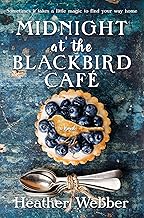


Spend time among: The Living and the Lost by Ellen Feldman

Pub Date 07 Sep 2021
The Living and the Lost, the new novel by Ellen Feldman, follows on last year’s excellent title, Paris Never Leaves You. Each of these books is about the resonance that WWII has had for its’ characters. I highly recommend both.
This novel offers a vivid sense of place, object, plot and character. In particular, watch as protagonist Millie goes to the train station in Berlin on a number of occasions. In terms of objects, consider the breakfront. Think of what the word means; it can be something shattering and a front can be the face that is shown to the world. What is the importance of this article of furniture in the novel? What do readers learn about protagonist Millie through it?
Millie grew up in Germany, made it to the U.S. (at great cost) and returns to Berlin to work post war. In today’s words, readers will identify Millie as having PTSD. This makes her life challenging. Millie’s brother David is her family. In what ways are they the same? Different?
Another important character is Harry. Millie works for him and readers watch as they get to know him. Where will their paths converge? What will their contact offer to each of them?
Throughout the novel, there are scenes of post war Berlin. Who are the victims other than the obvious ones? Will there ever be progress? Will anyone’s family be found post concentration camp?
What was it like to be a survivor in the U.S. during the war? How was it to know that this critical confrontation was not even fully in the awareness of some of the American Jewish characters? What does it mean to have the burden of surviving when others did not?
Think about the title of this novel, The Living and the Lost. While you may assume safely that you know who the living are,wonder, too, about the lost. To me, they are not only those who are dead but also those who have not found their way (yet) in post-war life.
The Living and the Lost is a complex, thoughtful work. I highly recommend it. It would be an excellent book club choice.
Many thanks to NetGalley and the publisher. All opinions are my own.
Dream big while: Under the Sun, Moon, and Stars
by Laura Kosann

#UndertheSunMoonandStars #NetGalley Pub Date 17 Sep 2021
This illustrated story reads like a fairy tale. It is about a little girl who learns that she can dream big dreams. Along the way, various critters offer the little girl their wisdom and yet at the end of the story it comes back to the importance of believing in one’s self. This is surely an empowering message.
I very much liked that message. I wish that I had enjoyed the illustrations more, but possibly that is just a matter of personal taste.
Many thanks to NetGalley and the publisher. All opinions are my own.
Some e book bargains for 8.29.21
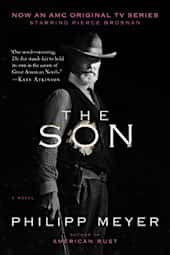


The Other Bennet Sister is an e book bargain for 8.29.21
The Other Bennet Sister A Novel by Janice Hadlow
 Let me just say at the outset that I adore this book. If you are a Jane Austen fan, definitely take a look at this title.
The other Bennet Sister is Mary. If you have read P and P, you know how she is portrayed there. In this title, readers will get to know Mary so much better. I felt for her immediately as some of the first things to come up in the novel had to do with being a middle sister, bookish, needing glasses, not feeling pretty (enough) and not necessarily wanting to go to parties. I could identify with these! I also relate to Mary’s efforts at self improvement as she approaches the piano and her father’s library. Watching Mary figure out her life while spending time with other members of the Bennet household made this a wonderful read for me.
I think that Ms. Hadlow has captured the tone of Jane Austen. Mr. B is still sardonic, Mrs. B is a bit empty headed and the sisters are very much themselves.
Another plus of this title for me is its length. At 480 pages it is a novel to sink into.
Many thanks to NetGalley and the publisher for this most enjoyable title. All opinions are my own.

