#Vermeer #NetGalley
Like many, I have been drawn to works by Vermeer in the museums that I have visited. Paintings like “Young Woman with a Water Pitcher” have left me fascinated. To me, that work invites the viewer to imagine the life of that young woman. What does she see at the window? What is her life like? With whom does she live? I think that Vermeer invites those seeing his paintings to imagine their own answers to these questions.
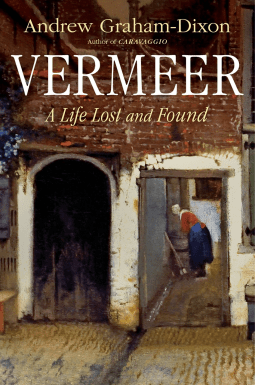
I was excited to see that, what appears to be, a definitive biography of Vermeer has just been published. It places Vermeer and his works firmly within his own time and historical context. There are many reproductions of works in this book. These definitely enhance the reader’s experience.
This title will, I think, appeal to scholars. However those who simply enjoy Vermeer’s art may well want to take a look at this book as well.
Many thanks to NetGalley and W.W. Norton & Company for this title. All thoughts are my own.
Pub date: 07 April 2026
Description:
from the publisher
This revelatory biography persuasively addresses the two great unresolved questions about Vermeer?why did he paint his pictures, and what do they mean?
One spring day in 1683, a notary’s clerk in Delft entered the home of the late Magdalena Pieters van Ruijven and stumbled upon one of the wonders of the seventeenth-century world: twenty paintings by Johannes Vermeer. Rather than dispel the mysteries of Vermeer’s life, this discovery merely gave rise to more questions: How had this one Dutchwoman come to possess the majority of the master’s work? And why have these images—among the most beautiful, even sublime, in the history of art—defied explanation for so long?
Following new leads and drawing on freshly uncovered evidence from Dutch archives, acclaimed art historian Andrew Graham-Dixon fills these long-standing gaps in art history, presenting a dramatic and transformative new interpretation of Vermeer’s life and work. Dixon considers Vermeer holistically, placing him in his complex historical, social, religious, political, and artistic context in order to understand what spaces he occupied in his life and how the texture of these spaces inspired his paintings and distinguished him from his artistic contemporaries. Dixon also interrogates the nature of Vermeer’s relationship with the Van Ruijven family, which was unlike any other known relationship in that time period, and discusses how this dynamic shaped his artistic practice.
Rich with piercingly direct descriptions of Vermeer’s paintings, Graham-Dixon’s biography is full of revelations. It upends the master’s enigmatic reputation and depicts him instead as a pioneer of the early Enlightenment, a pacifist who was deeply affected by the wars and religious conflicts of the Dutch Republic and allied to a radical movement driven underground by persecution. In Vermeer: A Life Lost and Found, Dixon does what countless art historians and scholars before him failed to: he brings Johannes Vermeer, renowned for his use of chiaroscuro, out of the shadows and into the light.
About the Author:
Andrew Graham–Dixon is an art historian, biographer, and broadcaster. He was for many years the main art critic of the Independent and The Sunday Telegraph and is the author of the award–winning biography Caravaggio: A Life Sacred and Profane. He lives in East Sussex.
From Kirkus Reviews:
British historian Graham-Dixon draws on archival sources to create a richly delineated portrait of Dutch painter Johannes Vermeer (1632-75) and the political and religious turmoil that shaped his life. The author focuses the biography on two overarching questions: “Why did he create his paintings? What did they mean to their creator, and to those for whom they were painted?”…A well-researched, penetrating investigation.

 Joyce's mystery and fiction book reviews with some non-fiction too!