ONE
In the corner of an office in an old-fashioned building in Beijing’s Chongyang District, the fan was humming loudly, like an elderly man angry at his own impotence. Mei and Mr. Shao sat across a desk from each other. Both were perspiring heavily. Outside, the sun shone, baking the air into a solid block of heat.
Mr. Shao wiped his forehead with a handkerchief. He had refused to remove his suit jacket. “Money’s not a problem.” He cleared his throat. “But you must get on it right away.”
“I’m working on other cases at the moment.”
“Do you want me to pay extra, is that it? You want a deposit? I can give you one thousand yuan right now.” Mr. Shao reached for his wallet. “They come up with the fakes faster than I can produce the real thing, and they sell them at under half my price. I’ve spent ten years building up my name, ten years of blood and sweat. But I don’t want you talking to your old friends at the Ministry, you understand? I want no police in this.”
“You are not doing anything illegal, are you?” Mei wondered why he was so keen to pay her a deposit. That was most unusual, especially for a businessman as shrewd as Mr. Shao.
“Please, Miss Wang. What’s legal and what’s not these days? You know what people say: ‘The Party has strategies, and the people have counterstrategies.'” Mr. Shao stared at Mei with his narrow eyes. “Chinese medicine is like magic. Regulations are for products that don’t work. Mine cure. That’s why people buy them.”
He gave a small laugh. It didn’t ease the tension. Mei couldn’t decide whether he was a clever businessman or a crook.
“I don’t like the police — no offense, Miss Wang, I know you used to be one of them. When I started out, I sold herbs on the street. The police were always on my tail, confiscating my goods, taking me into the station as if I were a criminal. Comrade Deng Xiaoping said Ge Ti Hu — that individual traders were contributors to building socialism. But did the police care for what he said? They’re muddy eggs. Now things are better. I’ve done well, and people look up to me. But if you ask me, the police haven’t changed. When you need protection, they can’t help you. I asked them to investigate the counterfeits. Do you know what they told me? They said they don’t do that kind of work. But whenever there is a policy change, an inspection, or a crackdown, you can bet they’ll jump on me like hungry dogs.”
“Whether you like the police or not, we must play by the book,” Mei said, though she knew her voice was less convincing than her words. Private detectives were banned in China. Mei, like others in the business, had resorted to the counter-strategy of registering her agency as an information consultancy.
“Of course,” agreed Mr. Shao. A smile as wide as the ocean filled his face.
After Mr. Shao had left, Mei walked over to stand next to the fan. Slowly, the faint breeze flowing through her silk shirt began to cool her. She thought of the time when she was “one of them,” working in the police headquarters — the Ministry of Public Security. Most of their cases were complex or politically sensitive; otherwise, they would not have been sent up by the Ministry’s branches. There were always a lot of agents, bosses, and departments involved. At first Mei liked the excitement and buzz. But as the years went on, she began to feel lost in the web of politics and bureaucracy. It was hard to know what was going on and how to figure out all the pieces of the truth.
Mei moved a little to get the full benefit of the fan. She looked around. Her office was a small room, sparsely furnished and with a window overlooking the dirt yard. Next to it was an entrance hall. Everything inside the agency said low budget and secondhand. Yet she was happy. She liked being her own boss and having full control of the jobs she took on and how she went about them.
The door opened. Mei’s assistant, Gupin, tumbled in, looking like a cooked lobster. Without a word, he dashed over to his desk in the entrance hall and drained a glass jar of tea that had been there since morning. He slipped the army bag from his shoulder and dropped it on the floor. “Was that Mr. Shao, the King of Hair-Growth Serum, I saw leaving?” He looked up, catching his breath. He spoke with a faint but noticeable accent that gave him away as a country boy.
Mei nodded.
“Are you going to take his case?”
“I told him I would, but now I wonder. There is something odd about that man.”
“He wears a toupee.” Gupin came over with a small packet wrapped in newspaper. “I’ve collected five thousand yuan in cash from Mr. Su.” He smiled. His face, still red from exertion, shone with pride.
Mei took the package and squeezed it gently. It felt firm. She made space for Gupin in front of the fan. “Was he difficult?” she asked. Gupin was now standing next to her, his bare arm almost touching hers. She could smell his sweat.
“At first. But he can’t scare me or distract me with his tricks. I’ve seen weasels like him before, and I’ve traveled many roads. I know how to make sure you get your fee, Ms. Mei. People get worried when they see a migrant worker like me in that kind of place.”
The word “weasel” sounded especially nasty in Gupin’s accent. Mei smiled. At times like this, she couldn’t help thinking how right she had been to hire him. And how odd it was that she had her younger sister to thank.
When Mei had opened her agency, Lu, her younger sister, was critical of the idea. “What do you know about business? Look at yourself — you don’t socialize, you can’t cope with politics, you have no Guanxi — none of the networks and contacts you need. How can you possibly succeed? Contrary to what you might think, my dear sister, running a business is tough. I know; I’m married to a successful businessman.”
Mei had rolled her eyes. She was too tired to fight anymore. Since she had resigned from the Ministry of Public Security, everyone seemed to want to lecture her.
“Well, I suppose you are at the end of your rope,” Lu said at last, sighing. “If you can’t hold on to your job at the Ministry, what else can you do? You might as well work for yourself. But I can’t watch you jump into a churning river without knowing how to swim. Let me find someone who can teach you the basics of business.”
The next day Mr. Hua had called to invite Mei to his office. There, she sat on a dark leather sofa and was served coffee by his pretty secretary while Mr. Hua talked about Guanxi, about which procedures could be avoided and a few that couldn’t, about creative organization and accounting, and most of all, about the importance of having sharp eyes and ears.
“You need to be sensitive to the change of wind and policy,” he said. “Make sure you always watch out for people who might stab you from behind. And one word of advice” — Mei had quickly learned that “one word of advice” was a favorite expression of Mr. Hua — “don’t trust anyone who is not your friend. You want to succeed, then make sure you have a good Guanxi network, especially in high places.” Mr. Hua topped up his coffee for the fifth time. “What about secretaries?” he asked Mei.
“What about them?”
“Have you thought about what kind of secretary you need?”
Mei told him that she had no plans to hire a secretary, not before she had any clients.
Mr. Hua shook his head. “You can hire someone for very little money. There are plenty of migrant workers from the provinces willing to work for almost nothing. The cost of having someone answer the phone or run errands is small, but the benefit is considerable. Your business won’t look right without a secretary. If you don’t look right, no one will come to you. Look around and tell me what you see.”
Mei looked around. The office was big and full of expensive-looking furniture. “You’ve got a great place,” she said.
“Exactly. What I have here is what people call a ‘leather-bag company.’ I invite foreign investors to become part of a joint venture. All foreign firms are required to have a Chinese partner, as you know. They come here to meet me, they see a grand setup, the best address. But they don’t realize that I have no factory or workforce of my own. They think I’m important, the real thing. I go and find factories only after I receive money from the foreign firm. If I can do one deal a year, I’m set. Two, I can take the rest of the year off.
“You see, making money is easy. The difficult part is getting people to pay up. That’s why I like to do business with foreigners. It’s much more difficult with the Chinese. One word of advice: When you hire someone, think about payment recovery and make sure your girl is tough enough to do the money chasing.”
Seeing the sense in what he was saying, Mei advertised for a secretary. Among all the applicants, Gupin was the only man. Mei had not considered hiring a man to be her secretary. But she decided to interview him.
Gupin had come from a farming village in Henan Province and was working on Beijing’s construction sites to get by. “I finished at the top of my class at our county high school,” he told Mei. “But I had to go back to my village because that’s where my official record was. I wanted to work in the county town, but my village head didn’t agree. He said our village needed a ‘reading book man.'”
It took Mei some time to get used to his accent and understand what he was saying.
“My ma wanted me to get married. But I didn’t want to. I don’t want to end up like my brother. Every day he gets up at dawn and works in the field all day. By the end of the year, he still can’t afford to feed his wife and son. My da was like that, too. He died long ago from TB. Everyone says there is gold in the big cities. So I thought I’d come to Beijing. Who knows what I can do here?”
Mei watched him. He was young, just twenty-one, with broad shoulders. Packs of muscle were visible under his shirt. When he smiled, he seemed bashful but honest.
Regretfully, she told him that he couldn’t do the work she needed. He didn’t know Beijing, and his Henan accent would put people off. “They will assume many thin…
 This book is another entry in the Little People, Big Dreams series for the youngest listeners. It tells the story of Josephine Baker, an African American performer who not only performed but did SO much more. She explored the world, moving to Paris where she found a less segregated society. Josephine was the first black woman to star in a film. She was a spy, mother of 12 adopted children and a fighter for civil rights. All in all, an inspiring and unique woman.
 I am most definitely both an Anglophile and a reader of many mysteries with clerical themes. For example, I think of the wonderful series by Kate Charles or Susan Hill that I have enjoyed. So, when I saw this title that was about the churches of England and Wales, I knew that I wanted to read it.
 Sometimes I just want to read a “nice” book, one that won’t stress me in anyway and will provide me with a bit of escape. Katie Fforde writes those kinds of novels, along with some other authors whom I enjoy, including Erica James and Jill Mansell.
 This story has whimsical illustrations that show life both above and below the ground. Above are the troll father and son, while below are the various animal families, all of whose houses are illustrated in detail. The story is simple; a seed falls into the ground and disrupts life both above and below. It is up to Jack to protect the (tomato) plant and restore order.
 Prunella wakes up on her third birthday determined to be a “big girl.” Her common refrain becomes “That’s for babies.” While stating this, Prunella denies herself old pleasures like special breakfasts, playing with a favorite doll, going to the playground and having playdates. Nonetheless, she remains determined until a storm awakens her at night. Prunella then tucks herself into bed with her parents. The next day she again participates in some of her favorite activities.
 One of the givens of childhood seems to be the wish to be older, bigger or cleverer. If you know a child who has ever felt that way, read this story with them. It humorously acknowledges how frustrating being small can be…and the possible ways to get around that.
 I really liked this book. The illustrations are bright and appealing, while also showing diversity. Boys will find that they can be whatever they dream of: Just a few examples from the alphabet: Ballet Dancer for B, Horse Trainer for H, Marine Biologist for M, Urban Planner for U and so much more. The fields cover such a wide range, everything from lawyer to fashion designer. This book belongs in a spot where children can see and enjoy it.


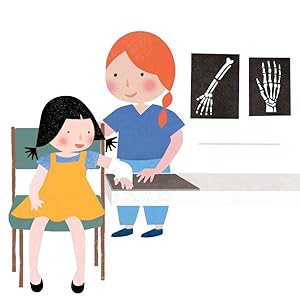
 This book is part of a series, My First Fact File. This is the first one that I have read and all indications are that these entries will be interesting and informative.
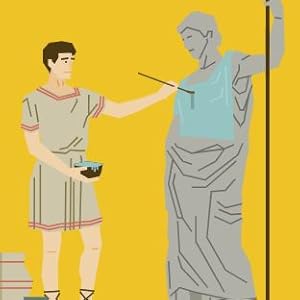
![The Eye of Jade: A Mei Wang Mystery (Mei Wang Mysteries) by [Liang, Diane Wei]](https://images-na.ssl-images-amazon.com/images/I/51KleOCifuL._SY346_.jpg) One of the benefits of taking a class is learning about books that one might not otherwise read. I had never heard of this novel or author but this is one of the titles for week six of Women Who Sleuth.
One of the benefits of taking a class is learning about books that one might not otherwise read. I had never heard of this novel or author but this is one of the titles for week six of Women Who Sleuth. Joyce's mystery and fiction book reviews with some non-fiction too!