





Great reads for adults and children!
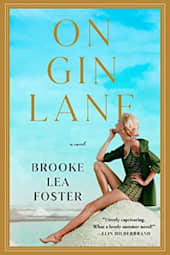




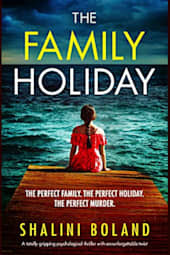
This book has summer read in its DNA. It is a novel by the author of Anatomy of a Scandal, a book that was made into a Netflix mini-series with Sienna Miller and Michelle Dockery.
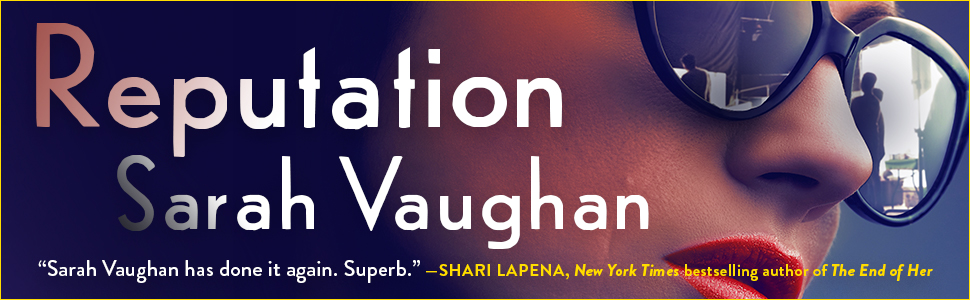
Here is an equally absorbing story that kept me always wanting to read just a little more. Readers are drawn into the world of a female MP and those around her. Emma is divorced and mother to teen Flora who is struggling. Emma is not really aware of this however as Flora tries to protect her. Emma’s ex has married Caroline to whom Flora does sometimes confide her worries, leaving Emma to learn of them second hand.
Emma has taken on causes important to women including the issue of revenge porn. Events cascade and as readers learn at the beginning of the novel. Emma becomes involved in a murder investigation. The victim is found in her home.
This book is so aptly named as the reputations of the characters are all on the line. There are the victim of revenge porn, the ways in which Flora’s reputation is ruined by friends and, of course, Emma’s own reputation for which she is fighting.
This is a fast and good read. There are some important issues here but they are delivered within the context of the story. I very much enjoyed waiting to see how matters would resolve themselves.
Many thanks to NetGalley and Atria for this title. All opinions are my own.
Pub date: 05 July 2022
 |  |  |
|---|---|---|
 |  |  |
|---|---|---|

This novel is the fourth by this author. It will be welcomed by the fans of her earlier books.
Alexis is an ER doctor. She is having a pretty bad day when the book opens. However, when she meets Daniel, her world could well be about to change. Daniel is a carpenter so perhaps not likely to be endorsed by Alexis’s surgeon parents. Also, there is an age difference between Alexis and Daniel with him being ten years younger than Alexis. Still, this is the world of romance so readers will surely hope for that happy ending.
This looks like it will be an enjoyable read in its full forms. Those who gravitate to women’s fiction and romance titles will want to give this book a look.
Many thanks to NetGalley and Forever Grand Central for this preview. All opinions are my own.
Pub date: 19 April 2022


 |  |  |
|---|---|---|












Today I am delighted to be part of this ongoing blog tour for summer Rom-Coms. Readers of The Matzah Ball will already know this author. Thanks to Justine Sha, Sophie James and the publisher for this opportunity. Rom-Coms can be the perfect summer read!

MR. PERFECT ON PAPER
Author: Jean Meltzer
ISBN: 9780778386162
Publication Date: August 9, 2022
Publisher: MIRA Books
Buy Links:
Social Links:
Facebook: @JeanMeltzerAuthor
Instagram: @JeanMeltzer
Author Bio:
Author Jean Meltzer studied dramatic writing at NYU Tisch, and served as creative director at Tapestry International, garnering numerous awards for her work in television, including a daytime Emmy. Like her protagonist, Jean is also a chronically-ill and disabled Jewish woman. She is an outspoken advocate for ME/CFS (Chronic Fatigue Syndrome), has attended visibility actions in Washington DC, meeting with members of Senate and Congress to raise funds for ME/CFS. She inspires 9,000 followers on WW Connect to live their best life, come out of the chronic illness closet, and embrace the hashtag #chronicallyfabulous. Also, while she was raised in what would be considered a secular home, she grew up kosher and attended Hebrew School. She spent five years in Rabbinical School. She is the author of The Matzah Ball and Mr. Perfect on Paper.
Book Summary:
From the author of the buzzy THE MATZAH BALL, a pitch-perfect romcom about a matchmaker who finds her own search for love thrust into the spotlight after her bubbe outs her list for “The Perfect Jewish Husband” on live television.
Dara Rabinowitz knows a lot about love. As a third-generation schadchan, or matchmaker, she’s funneled her grandmother’s wisdom into the world’s most successful Jewish dating app, J-Mate. Yet, despite being the catalyst for countless Jewish marriages, Dara has never been successful at finding love. Oh, she’s got plenty of excuses—like running a three-hundred person technology company and visiting her beloved bubbe every day. But the real reason Dara hasn’t been on a date in three years is much simpler. Though she desperately wants to meet her bashert, and stand beneath the huppah, she is frozen by social anxiety.
All that single dad Chris Steadfast wants to do is give his daughter stability. But with the ratings for the TV news show he anchors in the gutter, and the network threatening cancellation, Chris’s career – like his life with Lacey in Manhattan — is on the chopping block.
When her bubbe outs Dara’s list for “The Perfect Jewish Husband” when they’re guests on Chris’s live show, Chris sees an opportunity to both find Dara her perfect match, and boost the ratings of his show. But finding Mr. Perfect on Paper may mean giving up on the charming—and totally not Jewish—reporter following Dara’s nationwide hunt…
1
“Now,” Dara said, glancing down at her watch. “If you don’t mind, we’re on a tight schedule here. I need to get out of here before the coming of Moshiach.”
With that, the entire room jumped into action. Dara took a seat at her vanity. Bobbi laid out the makeup palettes, flipping on two nearby lights to mimic the high-intensity light-ing of a studio. Simi took the clip out of her hair, allowing Dara’s thick black corkscrews to fall free around her shoulders.
Naveah moved to the center of the room, by the built-in island that housed an impressive array of shoes, and began unzipping the plastic packaging. Hanging the outfits up on a mobile rack, she worked hard to carefully display each item.
“Okay, we have three looks for you to choose from this morning.”
Dara analyzed her choices. There was an elegant pleated skirt and tight cashmere sweater. It was Jewy, which went with her brand, but possibly too Jewish for a nationally syndicated televised event that needed to appeal to a broad audience. She glanced over to her next choice, a pair of smart silk pants and a floral blouse. Finally, there was the casual tech look. A pair of tight blue jeans, Converse sneakers and a Patagonia vest.
“Number two,” Dara said.
“Fabulous,” Naveah swooned, hanging it up on the room divider screen.
Dara stepped behind the screen, tossed off her robe and changed into the outfit. After a few moments, she returned to the center of the room, taking her usual place in front of the full-length mirror to analyze the final look.
The black silk pants, cinched at the ankles, gave her more curves than usual. The dramatic blouse, made from the most luxurious of fabrics, was imprinted with stunning large white orchids. It achieved the right type of look for her interview. Professional yet feminine. Assertive without feeling aggressive. It was all the things she needed to accomplish as a powerful female executive—often held to a different standard than her male counterparts.
“What do you think?” Naveah asked, looking over her shoulder.
“It’s perfect.”
Everyone applauded. Dara sat back down at the vanity. Simi ran her fingers through her curls, while the rest of her staff gathered round, peering down at her with tablets and makeup brushes in hand.
“And what’s the look we’re going for today?” Cameron asked.
“Professional,” Dara instructed.
“Got it,” Cameron said, moving to pick out a pair of maroon heels. “A pop of color to go with all that black and white!”
“And the hair?” Simi asked.
“Just put it up.” She smiled. “A stylish bun, nothing too sexy.”
Bobbi and Simi began working on her hair and makeup.
Meanwhile, Naveah pulled up a chair and turned on her tablet. “Now, I know you’re taking this afternoon off to be with your grandmother, so what do you need me to work on in your absence?”
“I sent you a list this morning.”
Naveah tapped on her screen. Moments later, she had the to-do list that Dara had sent her at four o’clock in the morning. “‘Grocery,’” Naveah said, reading the items aloud, “‘laundry, check with caterers for Yom Kippur breakfast, confirm travel for all executives attending October J-Mate sales conference, confirm all of Miriam’s oncology and radiation therapy appointments for September…’”
Dara was always making lists. Always trying to figure out how to turn her chaotic and extremely busy life into some-thing manageable and organized. In truth, her to-do lists, like her obsessive planning, helped her control her anxiety.
She was certain that her nonstop list-making drove every-one she worked with—including Naveah—straight-up meshugana. Janet had even once jokingly referred to Dara as the Good List Dybukk, a dislocated soul who appeared without warning and sprinkled to-dos on every person who crossed her path. Fortunately, as Dara paid her staff extremely well for their efforts, they kept the majority of their criticisms to themselves.
Dara heard the familiar refrain of an incoming Skype call. “Got it!” Naveah said, snapping at Cameron to grab Dara’s phone. “It’s Janet.”
Dara waved Simi away from her face. She asked everyone to give her a minute, and her entourage left the room. Dara waited for the door to shut firmly behind them before continuing.
“Good morning!” Janet beamed from her home office in Colorado.
“What time is it there?” Dara asked.
“Early.” Janet laughed. “You got the whole crew with you today, huh?”
“You know it,” Dara said, glancing at her half-done makeup in the mirror.
Just as Dara’s generalized anxiety disorder was well-known among those she worked with, so, too, was the fact that she genuinely despised all types of public appearances. Alas, that didn’t stop her from doing them. She had learned early on that selling herself on television, in interviews and on Instagram was a necessary evil. Everybody wanted a face, a real person to support, behind the brand. Over the years, Dara had de-vised all sorts of systems for handling her anxiety regarding these appearances.
“And how are you feeling this morning?” Janet asked, get-ting right to the point.
“Oh, you know me,” Dara said. “I’m only nervous for the three days before and the six days after…so in terms of the actual interview, I imagine it will go just fine.”
Janet laughed. “You’re going to do great, Dara.”
In truth, she always did great. She was a perfectionist, after all. She always had a plan and always said all the right things. She smiled in all the right places. She was never caught off guard, and therefore, never floundered. Though the glam squad and to-do lists may have seemed overkill to some, her obsessive-compulsive tendencies worked. Her business was thriving. Her reputation in tech, and the Jewish world, was flourishing, too.
“Like we already discussed,” Janet continued, “there shouldn’t be any surprises, okay? Everything has been worked out between our publicity people and their producers. You want to run through the script one more time?”
“No,” Dara said, firmly. “I got this.”
Janet nodded. “Then I hope you have a blast with your bubbe today.”
The camera shut off. Dara put her phone away, catching sight of her reflection in the mirror. Her hair had been ar-ranged into a sophisticated bun. Her angular features had been softened with light contouring. On the surface, she was the picture of poise and finesse. And yet, her hands were shaking.
She cracked her knuckles, took a sip of tea. She knew it was ridiculous, being this nervous about going on Good News New York, a show that nobody even watched…but she couldn’t help herself.
Dara watched it.
Religiously.
It was a habit of hers to keep the television running in the background while she worked. She liked the noise, the hum of familiar voices. It helped her anxiety. She especially liked the deliciously handsome head anchor of Good News, Christopher Steadfast, and the easygoing way he ended every episode with the words, “I’ll be waiting for you.”
Unfortunately, it had a weird time slot. Midafternoon, during the week, squeezed between the morning talk shows and the soap operas. Plus, it was an oddity in the world of live broadcasting in that it only focused on positive stories. Good news and human interest tales, like the two kids who donated proceeds of a lemonade stand to a homeless shelter, and Bucky, the vegan golden retriever.
Dara adored the segments on Bucky. She watched all of them, often on repeat, staying up late into the night, scrolling through all his reposted videos on the Good News New York Facebook fan page. In fact, the only reason she had even suggested going on Good News New York to begin with was for a chance at meeting the King of Aww himself. Though she was far too mired in her own busy schedule (and anxiety) to ever own a pet herself, she had adopted the quirky golden retriever in her heart.
As for Christopher Steadfast, it could never happen. And the reason it could never happen was right there in his name. Christopher Steadfast was not Jewish. As such, and thanks to a very clear rabbinic prohibition against interfaith marriage, she regarded the man the same way she would some beautiful non-Jewish Fabergé egg you passed by in a museum. Some-thing to gaze upon and admire…but never, ever touch.
She couldn’t believe she would be meeting him today. The dog, obviously.
Not the man.
She had no interest at all in some sexy Southern heartthrob with a voice that could melt schmaltz and the pectoral muscles of a Norse god.
Dara shook the thought away. Then, as her own ema, or mother, had taught her, she focused all her energy on dealing with practicalities.
She had Simi and Bobbi come back to the room, finish her hair and makeup. She did one final run-through of her sched-ule with Naveah. She had Cameron and Alexa double-check her bags at the front door, packing up her phone and tablet. Eventually, with well wishes and air kisses, Naveah and the entourage departed for the day. Normally, she would have someone from her staff accompany her to her events. But today, she wanted to focus on spending time with her grandmother.
Dara found herself alone in her apartment once more. She glanced down at her watch. She still had fifteen minutes left before she needed to head out to her bubbe’s. Fifteen minutes. It was a long time to sit around staring at the concrete walls of her apartment. Quiet was dangerous for Dara. It left her open to obsessing.
She moved to fill the space. She brushed her teeth again. Double-checked the bedroom, making sure the bed was made and everything was neat and tidy. She turned off her computer monitors and all the lights. She unplugged her coffee maker and double-checked the third bedroom for any hair straighteners or curling irons left plugged in. She made sure all the knobs on the oven were turned off, and that the patchouli candle was blown out. She pulled out her phone and snapped a photograph of both. Just in case her brain started obsessively worrying that she had left something on by mistake, and she was single-handedly responsible for burning down all of Hoboken.
Dara landed at the front door. Her eyes wandered down to her red high heels. She hated wearing heels in the city. Not for any practical reason, or because they gave her blisters. But because in case of emergency, the zombie apocalypse or an-other mass casualty event, she was worried about having to traverse sixty city blocks—or, God forbid, a bridge—to get back home.
She debated her options. She could pack her heels and wear sneakers for the commute, but that would require yet another bag for the simple day trip into Manhattan.
She hated that it had to be that way. That she couldn’t just be judged on who she was and what she created. Sadly, Dara was a realist. A huge part of her success in life had been understanding how the world works, and the way people inter-act with each other. Whether she agreed with it or not, first impressions were important. Like a shidduch sheet, or a profile on J-Mate, everybody went to the photo first.
Otherwise, she looked perfect. The house looked perfect, too. Perfection was the layer of armor she wore to protect her-self from the swings and swipes of an uncertain world.
She reminded herself of the positive. She was going to be spending the day with her beloved bubbe. They would be making important memories together. Necessary memories. Any anxiety she felt—any sense that something terrible was about to happen—was simply the neurons in her brain misfiring. Her feelings could not be trusted.
Forcing her shoulders back, and her chest upward, she projected confidence. And then, slinging her messenger bag over one arm, she grabbed that box of black-and-white cookies from the kitchen counter and headed out.
Excerpted from Mr. Perfect on Paper by Jean Meltzer, Copyright © 2022 by Jean Meltzer. Published by MIRA Books

All the January 2023 Prepub Alerts in one place, plus a downloadable spreadsheet of all titles from every post.
— Read on www.libraryjournal.com/story/prepub-alert-january-2023-the-complete-list

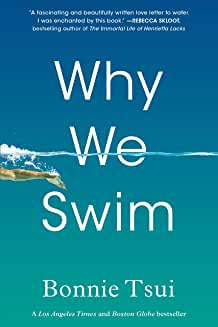
Does this book’s cover draw you in? Are you looking for a sense of peace in our rather turbulent world? If you answer yes, you would be hard pressed to find a more enthusiastic believer and guide to helping you with a mindfulness practice.
This title is divided into sections on moving, thinking, knowing, doing and dreaming. Within each are workbook activities to draw the reader/practitioner in. For example, in the book’s first activity, readers are asked to connect with their bodies and express thoughts in writing about their body parts; readers are encourage to think about gratitude for how, say a hand, works. For each activity, there are a list of what you will need to complete the activity and directions on how to try it out.
The author suggests that readers may approach this title in whatever way feels most comfortable. Some may start at the beginning and keep going while others may focus on a particular section or even just choose a random selection. Whatever way works, readers will get something from this title if they are willing to engage with it.
Many thanks to NetGalley and Quarto Publishing Group-Wellfleet Press for this title. All opinions are my own.
Pub Date 23 Aug 2022

I am fascinated by the college admission process but at the same time note how incredibly stressful it is for students to apply to their dream (and other) universities and colleges. There is the pressure teens put on themselves, the expectations of their families, the knowledge of what their friends are considering, their grades, activities, values….the list goes on. It is a scrutiny that teens undergo that I think is worse than what adults face in job interviews. Adding to the strain, high school students are so vulnerable and view colleges “no” letters very personally. What to do? I wish I knew.
I honestly had mixed feelings about this guide to getting into college. It is absolutely packed with information. A look at the Table of Contents shows how much is covered here; this is a truly extensive dive into the process. However, parts of this book may raise, rather than lower a student’s anxiety level. For example, when I read some of the sample college essays, I thought about how it would feel to write one of them. Even with my master’s, I felt a bit intimidated.
I think that this is a book to look at and then decide upon based on the child and their family. Many have praised this book. I just worry that it could add to the pressure of the whole process. To her credit, the anxiety is also a topic in this title.
Many thanks to NetGalley and Advantage Media Group for this title. All opinions are my own.
Pub Date 26 Jul 2022