
 These books are all between five and ten dollars
Other e book bargains for today:





Great reads for adults and children!
These books are all between five and ten dollarsOther e book bargains for today:
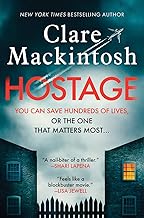
Are you a person who finds getting on an airplane to be an adventure or are you a nervous flyer? Either personality type may well be riveted by this thriller in which much of the action centers on a long haul flight from London to Sydney (20 hours in the air!). In some ways, the story is a take on a locked room mystery in that much of the action is confined to the plane and the stories of its passengers and crew. However, there is also backstory so some time is spent on the ground and with other characters.
The book’s protagonist, Mina, is on the flight when…a note is given to her. What does it say? How will it influence what she does? In order for there not to be spoilers, it is not possible to say more except that this is a story that may well put readers on the edges of their seats.
My only quibble with this story is that I did not absolutely love some of the characters and I don’t just mean the “bad” ones.. I do, though, admire Ms. Mackinstosh’s imagination and storytelling ability. Readers, remember that this is fiction!
Many thanks to NetGalley and the publisher for this title. All opinions are my own.
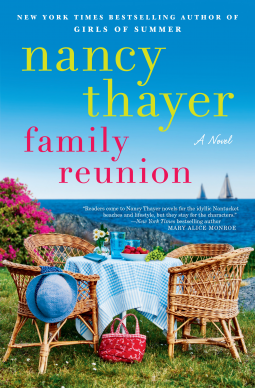
Nancy Thayer engages and entertains her readers. She is masterful at creating settings, in this instance the island of Nantucket, its museums, shops and more. Ms. Thayer also brings the home of protagonist Eleanor into lovely focus. I wanted to spend time in this house that was a haven to generations, and also to be on the island. So, I think that those looking for virtual escape will enjoy this title.
Protagonist, Eleanor, is turning seventy years old. Over the course of the novel, she lives her life in the present and also looks back at her marriage, parenting, relationship with her granddaughter and more. Other characters also live and look at their lives and relationships including Ari, a recent and idealistic college graduate whose life goals do not always match her family’s expectations. Ari’s mother enters the story as a woman who cares deeply about status and social standing. Her brother, whom she believes Eleanor loved more, has a wealthy lifestyle and seems more carefree.
A sticking point within the family is that Eleanor’s children would like her to sell her house for a lot (!) of money. Eleanor thinks that she knows her decision. Will this change? What will Eleanor, Ari and others learn over the course of the summer? How will the plot resolve? Read this one to find out.
I enjoyed this title and recommend it. I plan to go back into my TBR pile and to read other novels by Ms. Thayer.
Many thanks to NetGalley and the publisher for this title. All opinions are my own.
#TheBodyInTheGarden #NetGalley
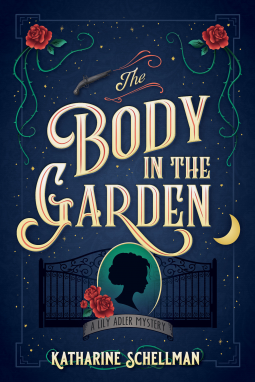
The Body in the Garden is the first title in the Lily Adler historical mystery series. A second book has already been published. This one will be an engaging treat for those who enjoy cozies set in the past. The characters are brought to life and readers will be interested in their connections to one another.
At a time when a woman’s role was to be a wife, in this story set in 1815, Lily is a young widow. This makes her place in society different from that of her peers. When the story opens, Lily has recently returned to London. Her best friend invites her to a ball, assuring Lily that, as she now wears lavender mourning garments, it is acceptable to attend. While at the soiree, Lily overhears a heated conversation in the garden. When a murder occurs, she is determined to find its cause, especially as the nascent police service has been paid not to investigate.
The victim is a friend of Miss Oswald. She is of mixed race, born outside of marriage but acknowledged by her father and is a young woman with a great fortune. She, Lily, a friend of Lily’s husband named Jack, and others are involved in the unfolding events.
Reading this book requires some suspension of disbelief. I am not convinced that Lily would have been able to do all that she does had she been a real person in this time period. However, readers who will not be bothered by that will find this to be an easy and enjoyable read.
Many thanks to NetGalley and the publisher. All opinions are my own.
#Leaders #NetGalley Pub date: 12 October 2021
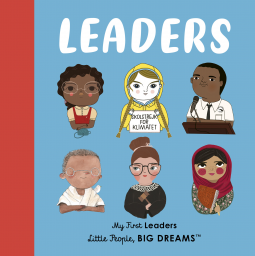
This is a lovely book for the youngest children. With engaging illustrations, it briefly talks about some leaders and the quality within each of them that led to the designation. The book encourages young ones to imagine themselves as leaders one day.
Just a few of those mentioned in these pages are Martin Luther King, Greta Thunberg, Rosa Parks and Gahndi.
This is a book that gently makes known the need for leaders. It encourages everyone to think big, to notice their world, and to believe in change.
Many thanks to NetGalley and the publisher. All opinions are my own.
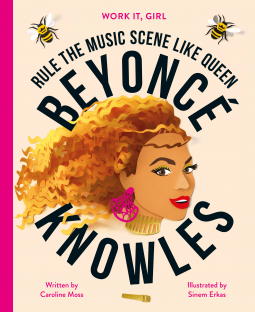
#WorkItGirlBeyoncéKnowles #NetGalley
Work It, Girl is an excellent biography for young chapter book readers. It tells the story of Beyonce beginning when she was a shy child. Beyonce’s parents accepted her personality but hoped to bring her out of herself a bit, so suggested a dance class. In many ways, the rest is history! With her family’s support Beyonce kept moving forward.
One thing that I very much like in this book is its emphasis on how hard Beyonce worked and what she gave up to achieve her early goals. When others in her school were dating or playing sports, she and her group members practiced and focused on school work with no time for anything else. This message is helpful for young readers who may think that Beyonce’s success was easy or automatic. It was not.
Readers follow Beyonce from her first girl band, through Destiny’s Child and on to her solo career. Beyonce continued to work hard and have big dreams. She also had a personal life and some of the book is devoted to this as well as Jay Z and Beyonce’s desire to become parents. In addition, readers watch Beyonce as she becomes active with Black Lives Matter.
The biography is illustrated with collage like pictures. There are also some photographs. The end of the book includes extras like a maze, a section titled “Rule the music scene like Beyonce” and more. There is so much to Beyonce’s story. Readers will realize this. This book would make a great choice for a biography book report as it is a good read and about a popular current figure.
Many thanks to NetGalley and the publisher. All opinions are my own.
Five stars

Beyoncé Gisele Knowles was shy. That was the best word for it. Shy. During recess at school, when all of her classmates would pair off or play games in groups, Beyoncé usually kept to herself. While the children talked and played, Beyoncé watched them, wondering what it might be like to be able to not be so self-conscious about, well, everything! She was always worrying what people were going to think of her, and it made her anxious. She just liked to stay quiet and observe the world around her.
 |  |  |
|---|---|---|
| A Girl Group Named Girls Tyme In no time, Beyoncé’s shyness was a thing of the past and she could not get enough of the spotlight on stage. Her parents were so excited. They loved to see Beyoncé blossom! Soon, Beyoncé and Solange were making up their own choreography in their bedrooms and singing as they danced. They didn’t even mind when their parents would peek in the room to catch them performing. That might have embarrassed Beyoncé before but not anymore. | Finding Fame… With and Without Friends Soon, everyone in the country was learning Beyoncé’s name. Destiny’s Child debuted their first album in February of 1998, but it didn’t do so well— despite the hit single “No, No, No Part 2” (with Wyclef Jean). A year later they came out with their second album. Their success hinged on that second album being bigger than the first. Would it happen? Beyoncé wanted this dream so badly. | I Want To Be An Icon “I want to be an icon,” Beyoncé told a glossy magazine in September 2008. She was 26 at the time, and really starting to come into her own. She was using her voice and making herself known—not just as an entertainer but as someone people should be keeping their eyes on. “I am over being a pop star,” she added. |
 |  |  |
|---|---|---|
| Empowered To Be Fierce… Sasha Fierce As Beyoncé pumped out songs like “Irreplaceable” and “Ring the Alarm”, the world was starting to get a sense of what she believed and what she valued. Through music, Beyoncé was putting out messages of female empowerment, feminism, and independence. | Life Is But A Dream During her hiatus from music, Beyoncé and Jay-Z thought it might be time to fulfill a secret dream they had kept to themselves. They wanted to be parents. They wanted to have a baby. It wouldn’t be so easy. Beyoncé encountered difficulties and heartbreak trying to start a family. | The Biggest Secret… Revealed Ever since dropping “Life Is But A Dream” Beyoncé became addicted to the element of surprise. She vowed to incorporate surprises as often as she could. If you weren’t sure by now, Jay-Z and Beyoncé were arguably two of the most well-known and famous people in the world, with a net worth of millions between them. This allowed them opportunities most people do not get, especially not those who have just given birth to babies. |
 |  |  |
|---|---|---|
| People Are Listening Soon after the secret Beyoncé album dropped, the star declared herself to be a feminist in British Vogue. What does being a feminist mean? Well, that’s actually a very easy question to answer. This is the definition of feminist: believing that men and women are equal. | Respect. Our. Lives. Her fans were clamoring for more. This was the Beyoncé they loved. Not just the incredible artist but the social activist, too. A group of her most ardent supporters labeled themselves the BeyHive (pronounced beehive!). Beyoncé, who once kept her personal opinions and intimate thoughts to herself, was starting to see the benefit in sharing her true beliefs with the world. | Find Your Inner Beyoncé Beyoncé has done so much to achieve her legendary icon status. Hit songs? Check. “Single Ladies”, “Formation”, “Crazy in Love”… the list goes on and on! Starring in movies? The Lion King, DreamGirls, Austin Powers… check. Winning dozens of huge awards? 23 Grammys, 28 MTV VMAs, Critics’ Choice Award… check. Donating her voice (and money, and time) to the important causes she believes in? Check. |
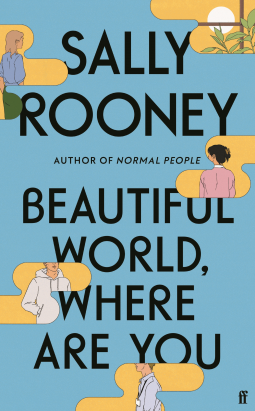
#BeautifulWorldWhereAreYou #NetGalley
Pub Date 07 Sep 2021
These comments cover just the first chapter of Sally Rooney’s upcoming new novel. I was intrigued by what I read.
In this chapter, Ms. Rooney does an excellent job of creating an atmosphere. A woman is sitting in a bar alone. It becomes clear that she is waiting for someone. A man enters. He does not know the woman but finds her after checking his phone. Who are they? What, if anything, will they become to one another?
It seems that Ms. Rooney may be planning to answer these questions slowly. Readers learn that the woman is Alice. As the layers unfold, readers discover that she is an author and that she is living rent free in a home that turns out to be a rectory.
Readers learn that the man is Felix. He works in a warehouse and is a native of the place where this scene takes place. It eventually becomes clear that this is some kind of date. The two spend a brief time at Alice’s house before the chapter ends.
And that is all I know without reading the description of the book. I would like to know more. Would you?
Many thanks to NetGalley and the publisher for this content. All opinions are my own.

#ChristmasIsComing #NetGalley
This is a beautifully illustrated book that describes many Christmas customs and celebrations. The book opens with an an explanation for how Christmas came to be celebrated on December 25th. From here, there are sections on many ways that the holiday is noted and celebrated. For example, have you ever heard of Grittibaenz? He is a bit like a gingerbread man in Switzerland. How about a German Christmas Market? Reading about that makes me want to go to one to look around. What are some of the stories behind the Christmas tree? Learn about the Swedish gnomes, called tomtar. Find out when children in different countries receive their gifts. All this and more make this book an interesting one for families to share. The world opens up as children learn the ways in which their celebrations are the same and/or different from those in other parts of the world. A great way to look forward to the holiday season.
Many thanks to NetGalley and the publisher for this title. All opinions are my own.

